BROCADÁ

ABOUT BROCADÁ

A contemporary home for living Zhuang brocade.

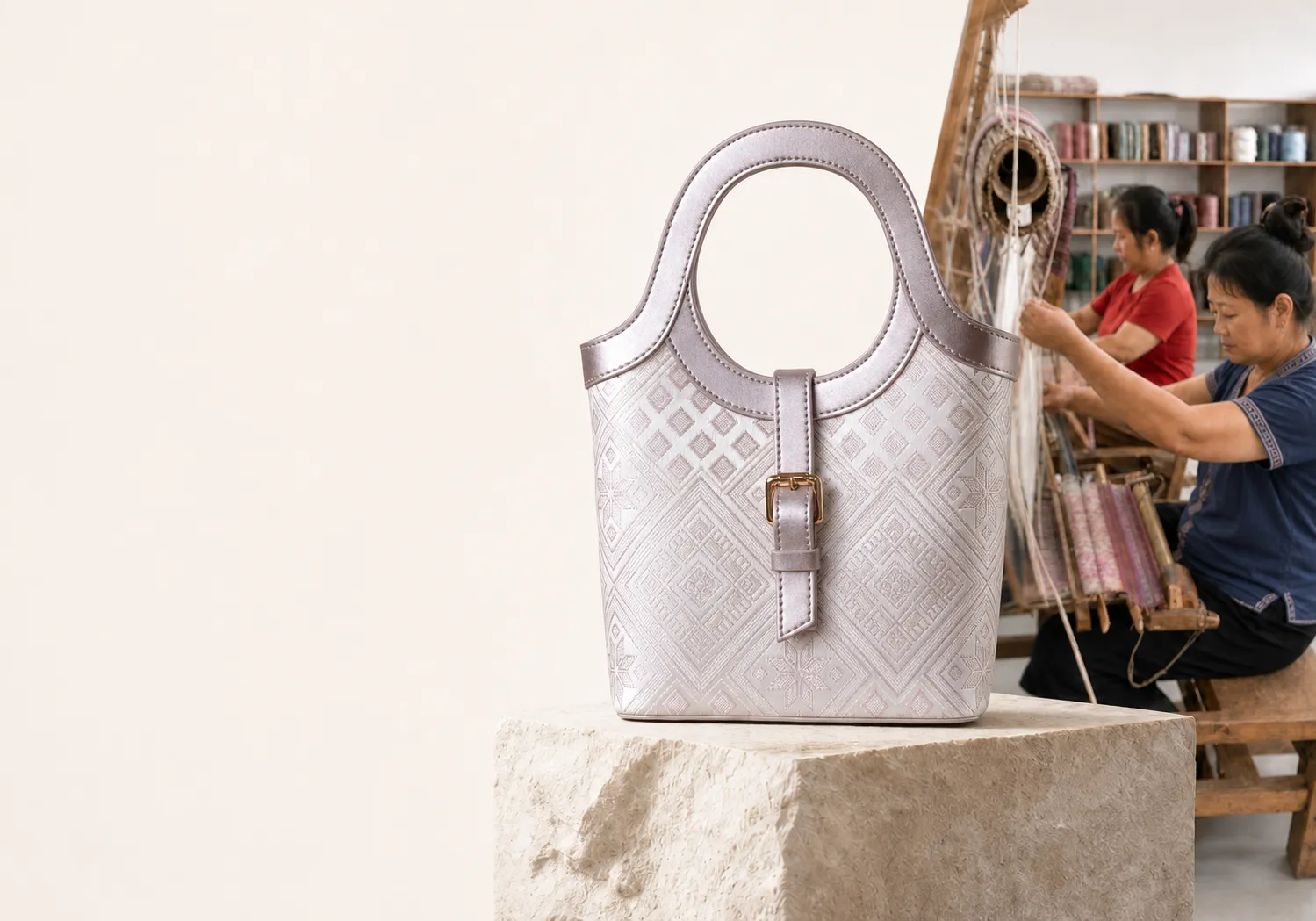
BROCADÁ begins with cloth: handwoven Zhuang brocade whose structure, colour and pattern are formed on the loom. We design useful contemporary objects around what the textile already knows how to do.
A pale BROCADÁ brocade bag displayed beside weavers working at wooden looms

WHY IT MATTERS

Heritage stays alive when it remains part of life.

Zhuang brocade belongs to the cultural landscape of Guangxi in southern China. Its patterns are not printed onto finished cloth: they are constructed through the weave, row by row, through attention to thread, tension, colour and repeat.

Our role is to bring that textile into daily use without turning it into costume or treating it as anonymous decoration. Bags, charms, scrunchies and textile figures are designed around the scale and direction of the woven pattern, then finished for the way each object will be carried, handled and stored.
Guangxi
Where the brocade is woven
Handwoven
How the pattern is formed
Textile first
How each form is designed
01

Start with the material

The woven panel sets the terms. A broad motif may need the uninterrupted face of a tote or bucket bag; a smaller repeat can sit naturally on a frame bag or charm. Cutting, structure and hardware are chosen to support that pattern rather than compete with it.

02

Make it useful

Respect for craft does not require an object to stay behind glass. A contemporary piece should open, close and carry comfortably. Lining, full-grain or vegetable-tanned cowhide, bamboo handles and metal hardware are used according to the needs of the silhouette represented in the collection.

03

Share context carefully

We name the textile as Zhuang brocade and connect it with Guangxi. We describe process and motif meaning where the context is supportable, and avoid presenting one poetic interpretation as a universal rule. The aim is clarity, not mythology added for sale.

OUR STANDARD

Variation belongs to handwork. Careless construction does not.

Small changes in thread, alignment or motif placement are evidence of a human-made surface. Every finished object should still meet clear expectations for balance, strength, clean assembly and working hardware.

FROM THE JOURNAL

Go deeper into the cloth and its context.

THE CLOTH IN USE

See how woven structure becomes a contemporary piece.

Explore the collectionContact BROCADÁ