BROCADÁ

THE ARTISANS

The weaver remains at the centre of the cloth.

A finished pattern can make difficult work appear effortless. Behind it are people who hold sequence, tension and material judgment through sustained practice at the loom.
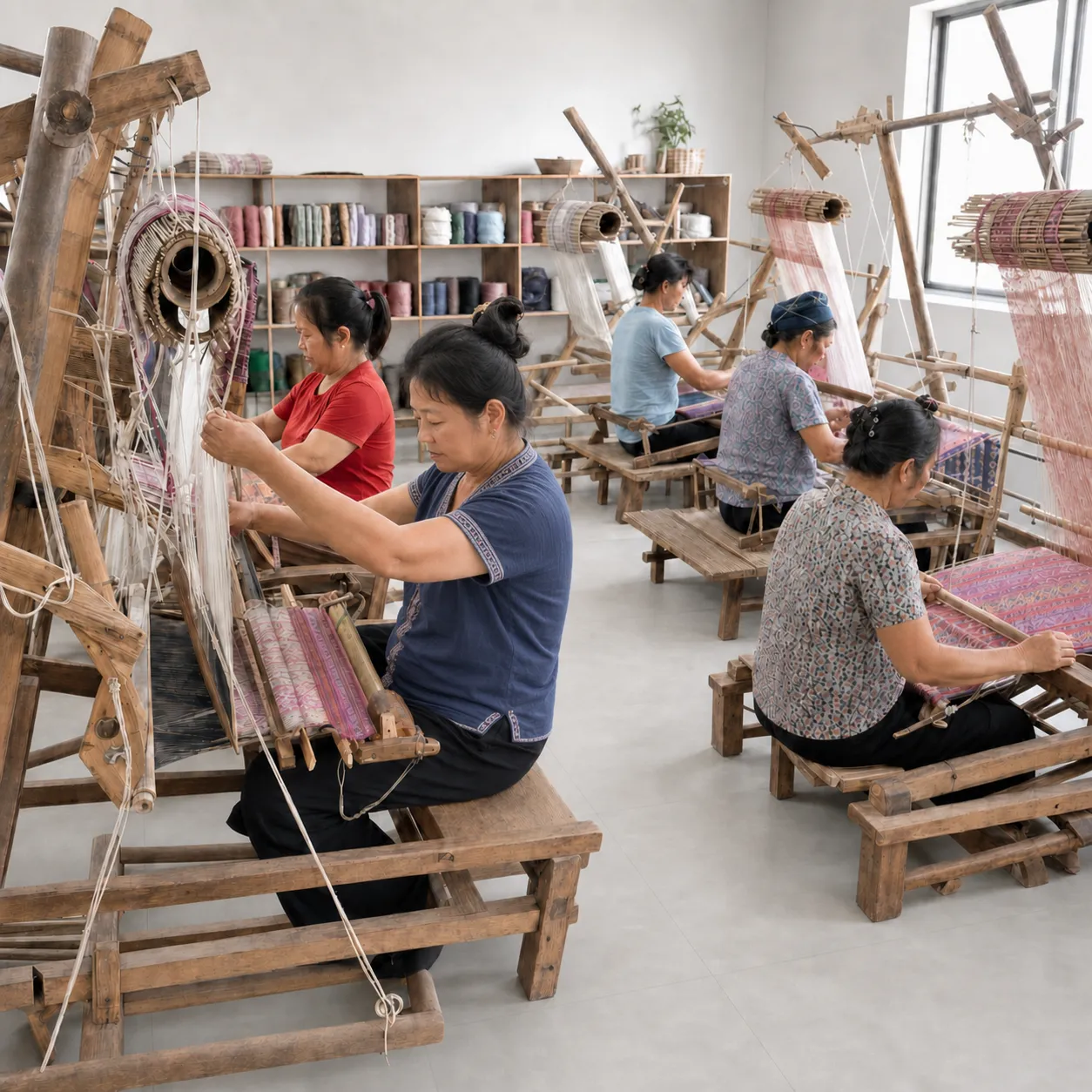
Five women weaving patterned textiles on wooden looms in a Guangxi workshop

WHY IT MATTERS

Knowledge is carried in practice as well as in pattern charts.

Hands learn how a thread should feel. Eyes catch a change in tension before it travels farther through the cloth. Experience allows a complex sequence to remain present while the loom keeps its rhythm. These forms of judgment are difficult to separate from the person doing the work.

For BROCADÁ, artisans are not atmosphere added behind a product. Their knowledge is the condition that allows the woven surface to exist. That is why we describe handwork through process and verifiable context instead of inventing anonymous legends or assigning a single story to every maker.
Human judgment
Tension, sequence and colour held in practice
Small variation
A visible signature of hand production
Continued use
How weaving knowledge stays relevant
01

Skill that the finished cloth can hide

A balanced textile conceals many corrections and decisions. The weaver monitors the relationship between threads while keeping the repeat legible. What looks inevitable in the finished surface is the result of attention maintained over time.

02

Variation with responsibility

Handwoven cloth may shift slightly in texture, alignment or colour meeting. Those differences should not be used to excuse weak construction. Makers and designers remain responsible for a stable weave, considered placement and a carefully finished object.

03

Keeping knowledge in daily life

A weaving practice continues through learning, useful work and people who value the time it requires. Contemporary bags and accessories give the textile a place in ordinary routines, allowing knowledge to move forward rather than be treated only as a museum reference.

PEOPLE BEFORE MYTH

We will not invent biographies, quotations or universal meanings to make a product story sound richer.

Individual makers should be identified only when the information is accurate and sharing it is appropriate. Where that context is not available, we describe the work we can verify: the place, material, loom process and skilled decisions visible in the cloth.

FROM THE JOURNAL

Go deeper into the cloth and its context.

THE CLOTH IN USE

See how woven structure becomes a contemporary piece.

Explore the collectionContact BROCADÁ