Momie: a guardian, not an ornament
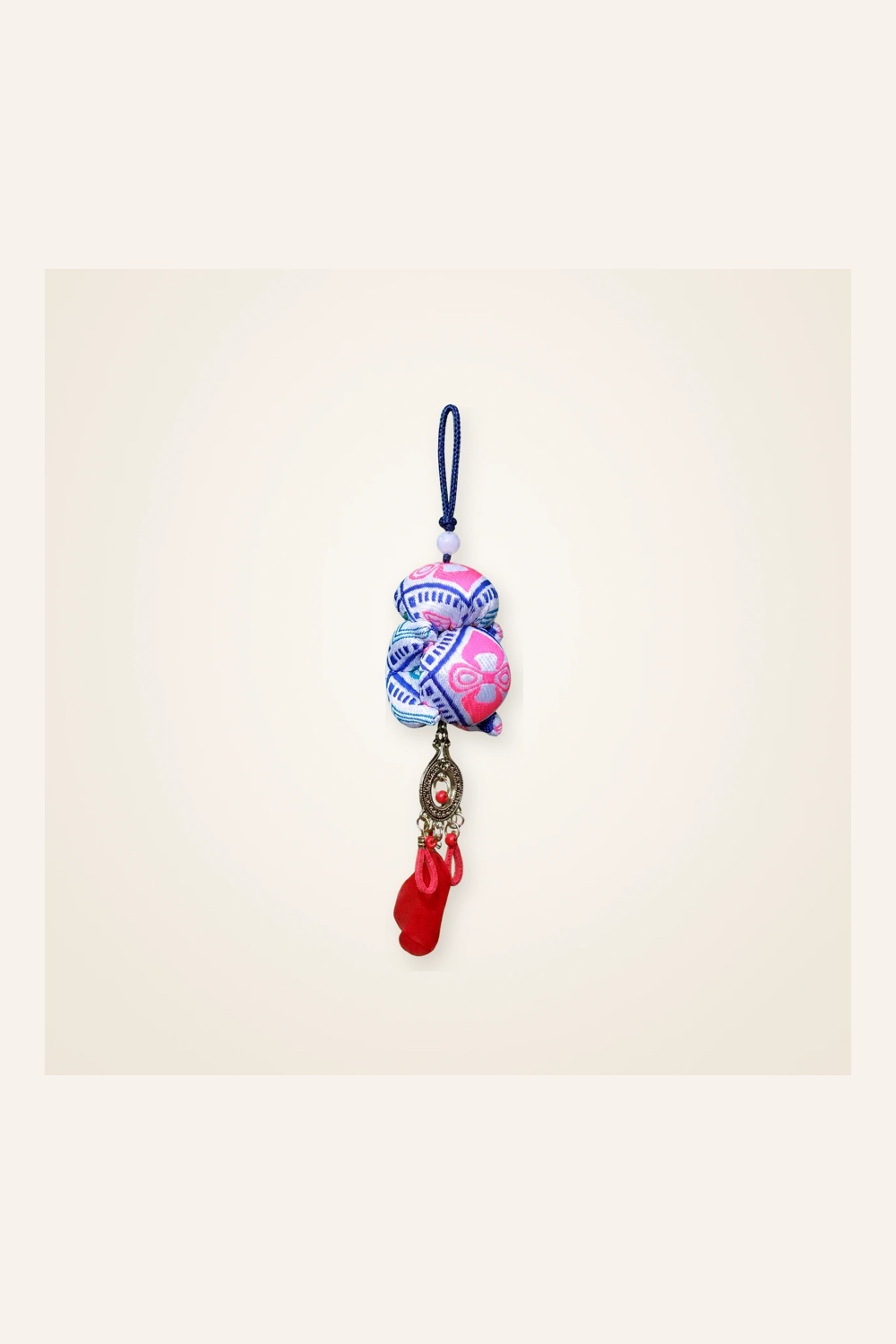
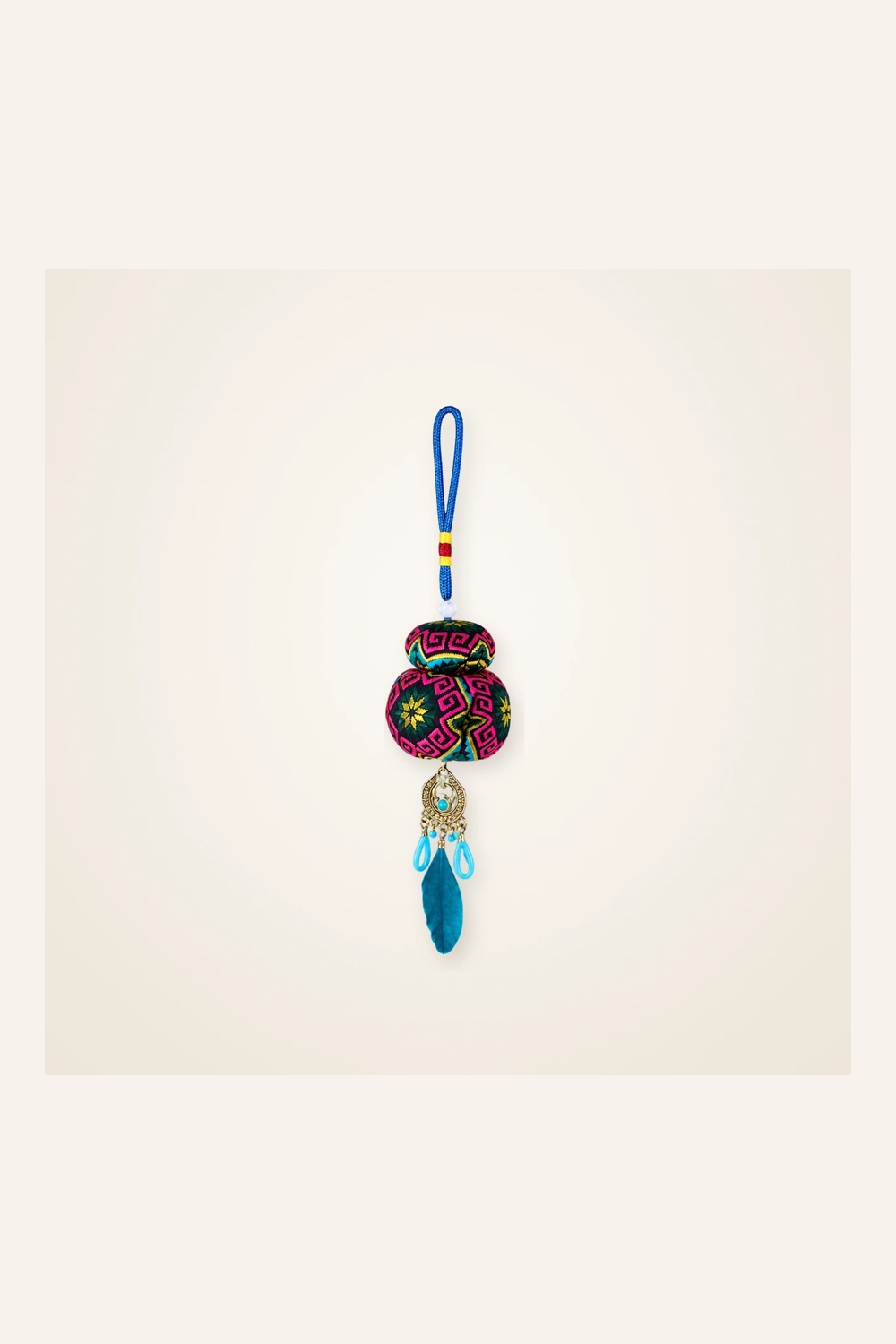
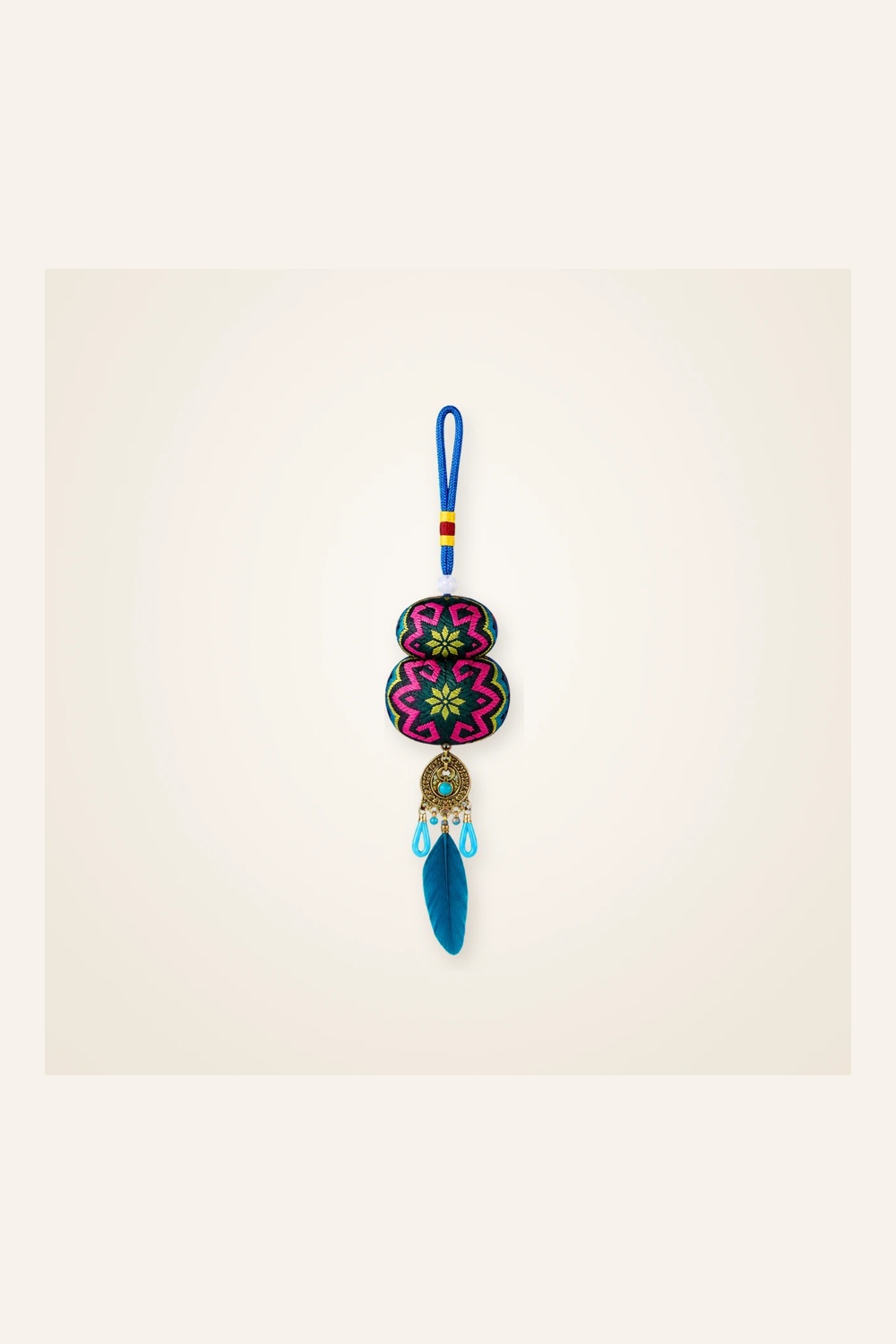
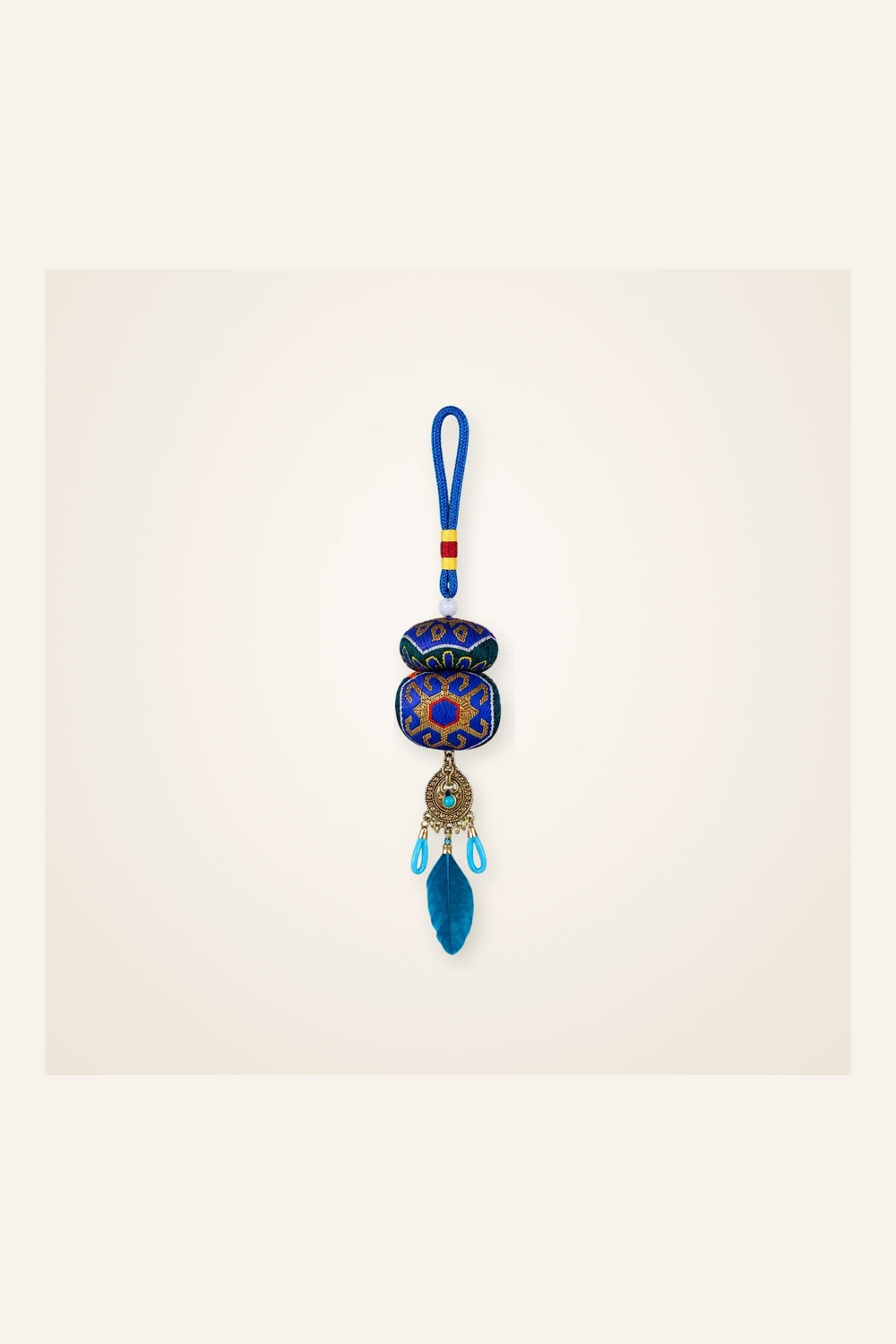
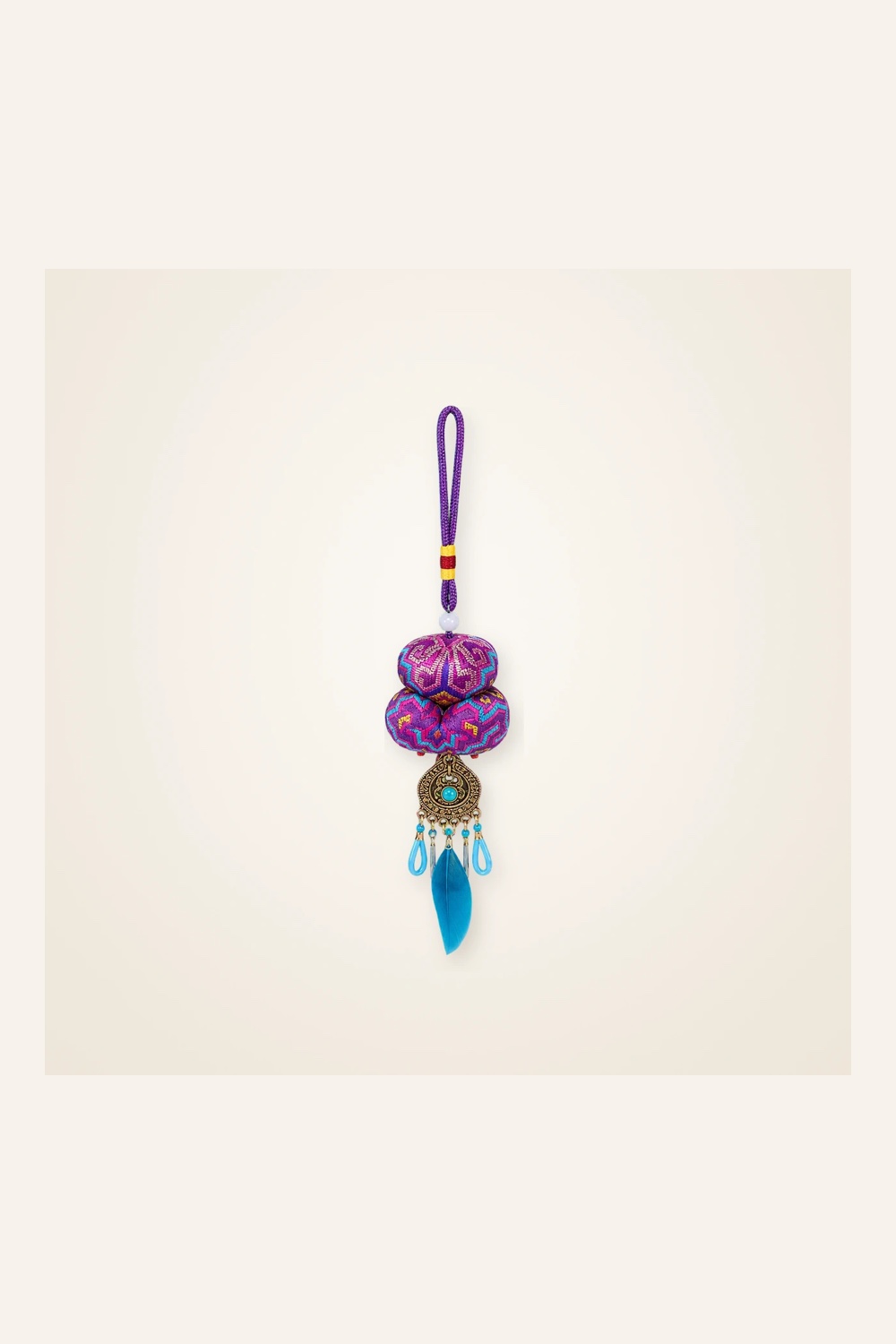
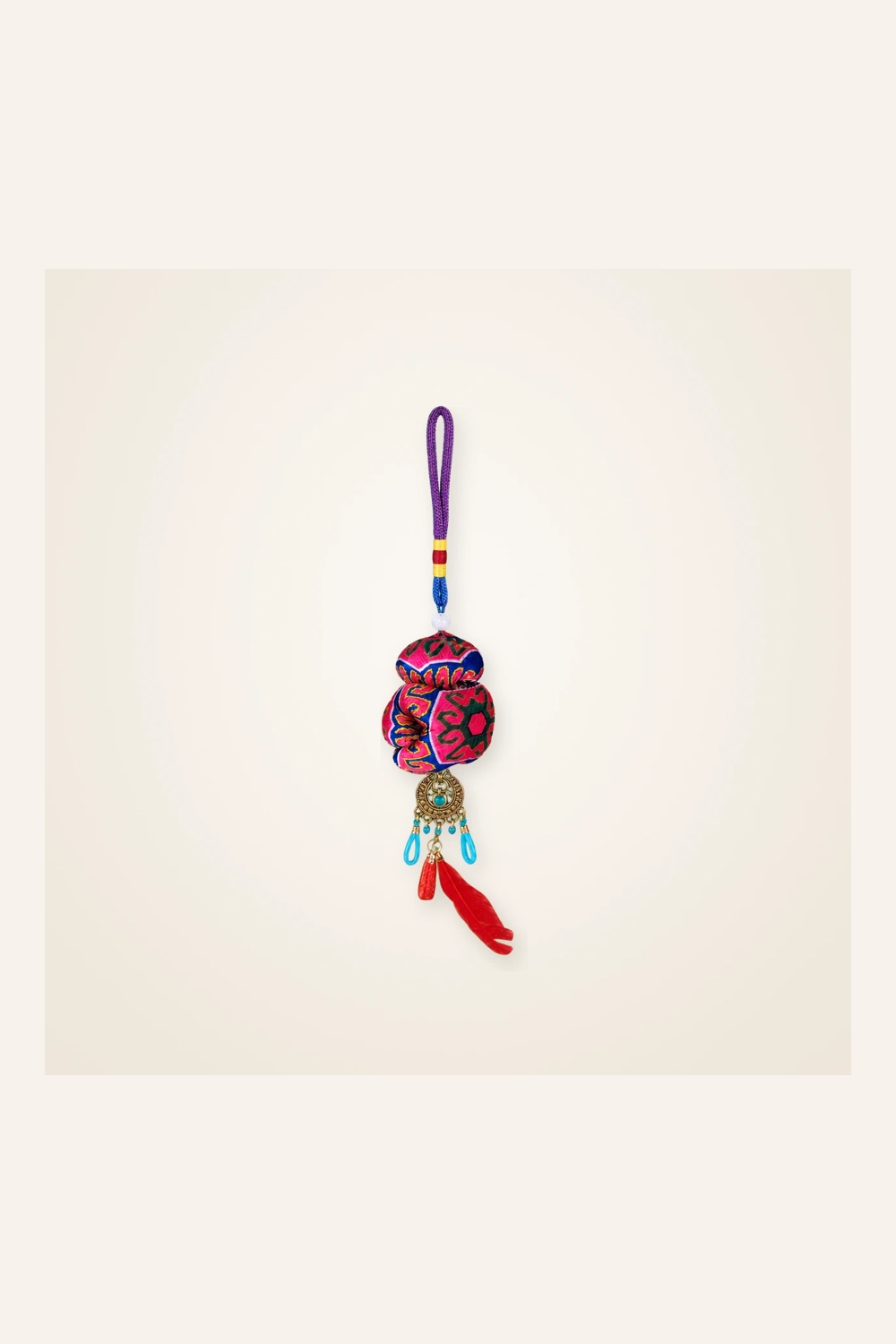
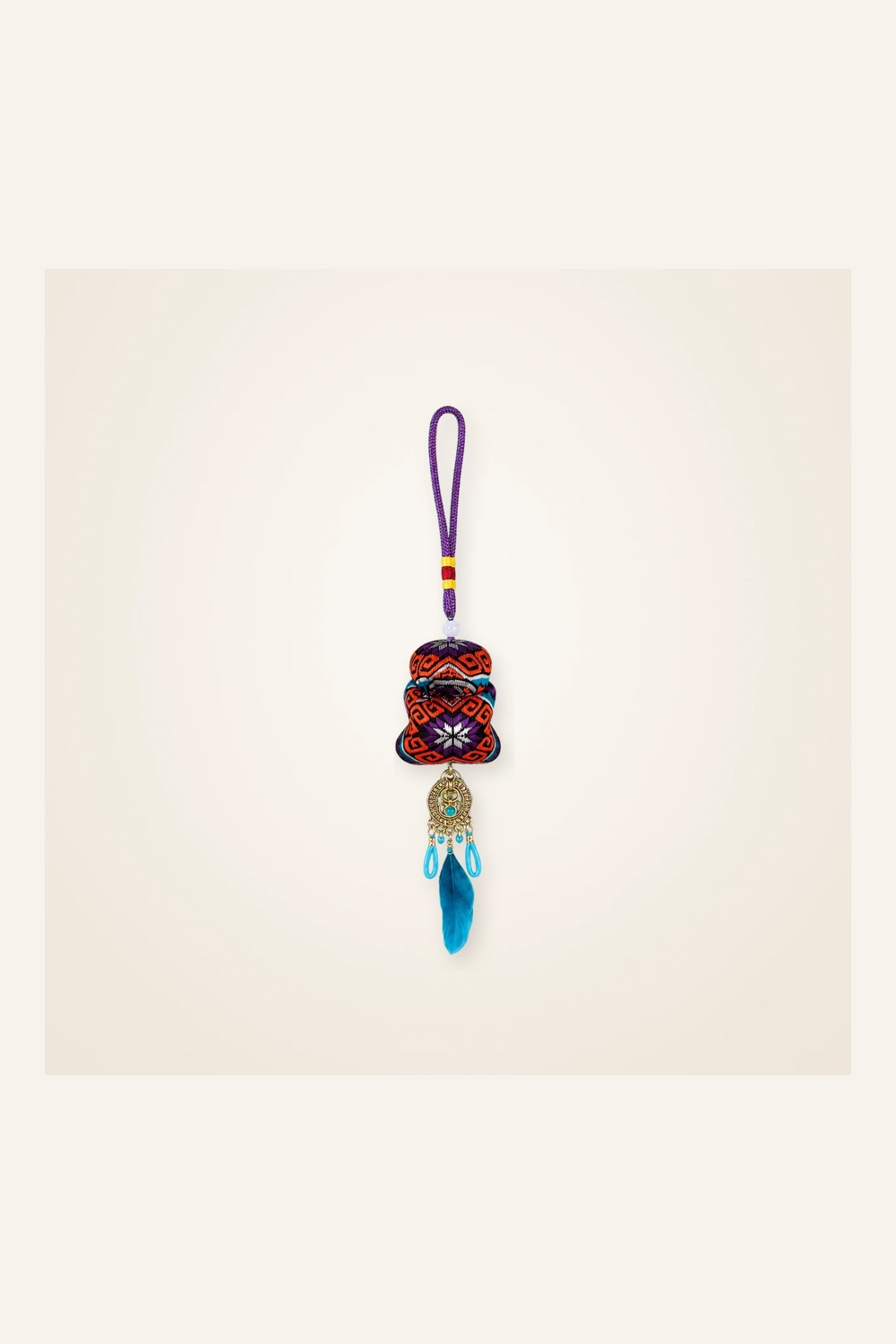
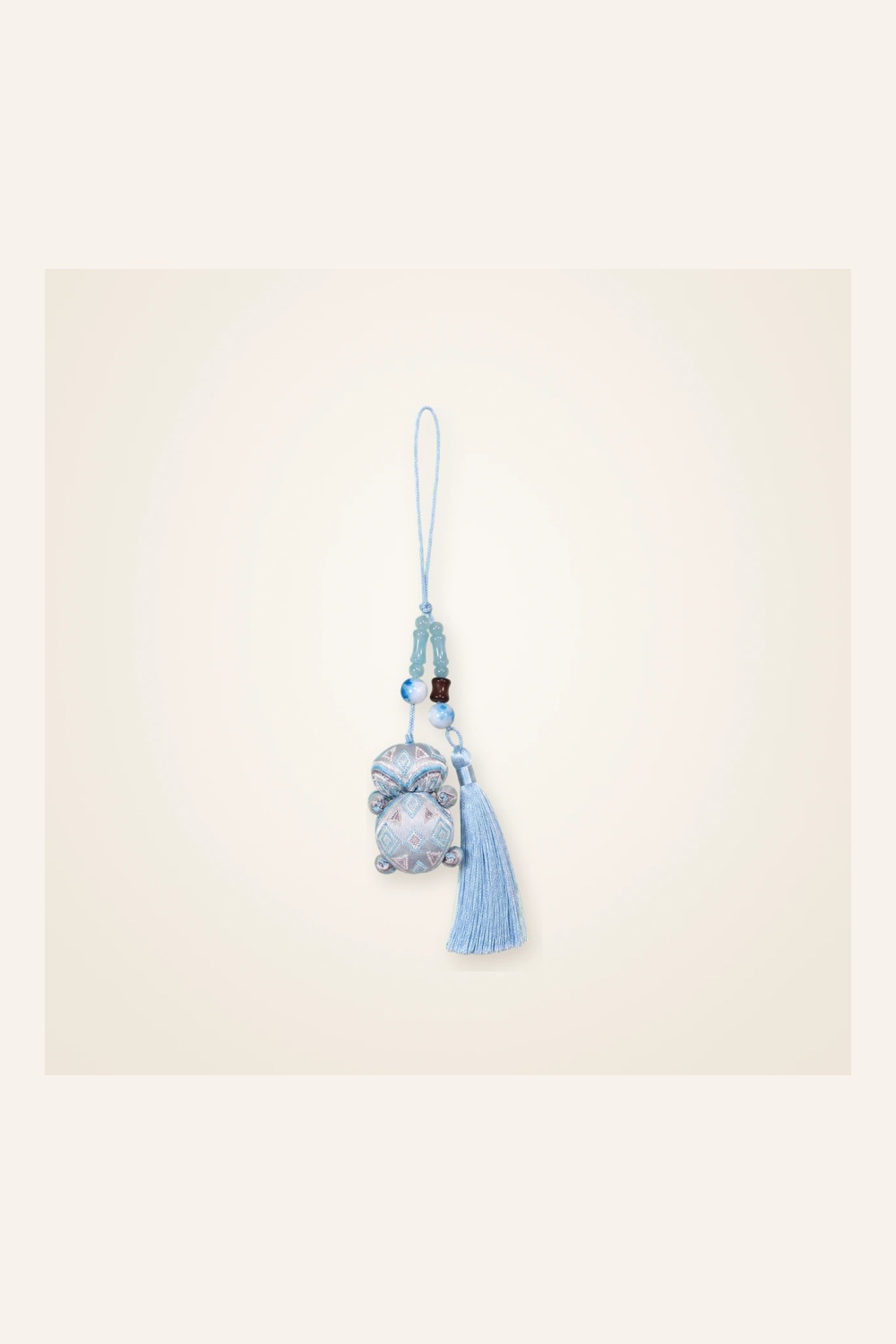
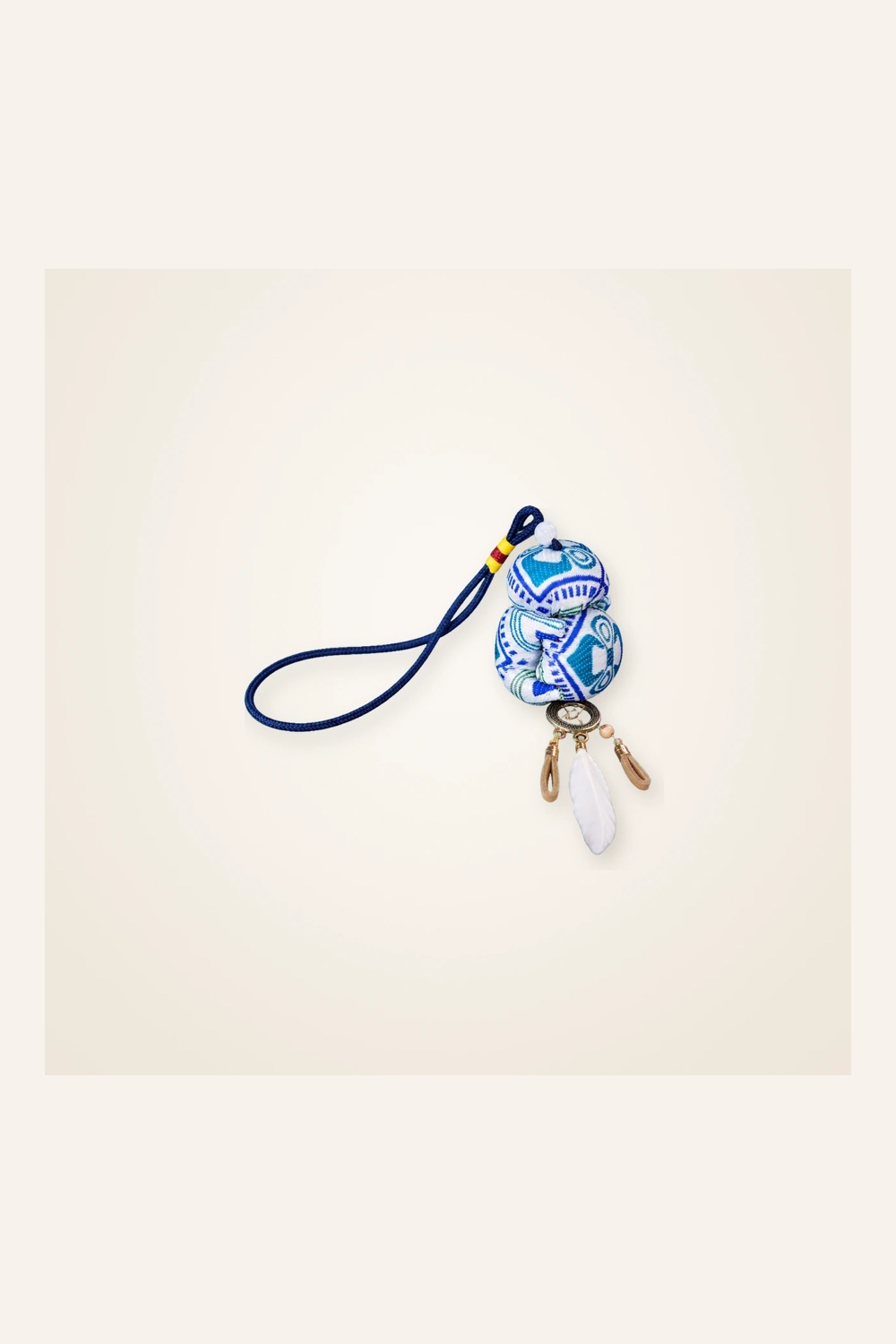
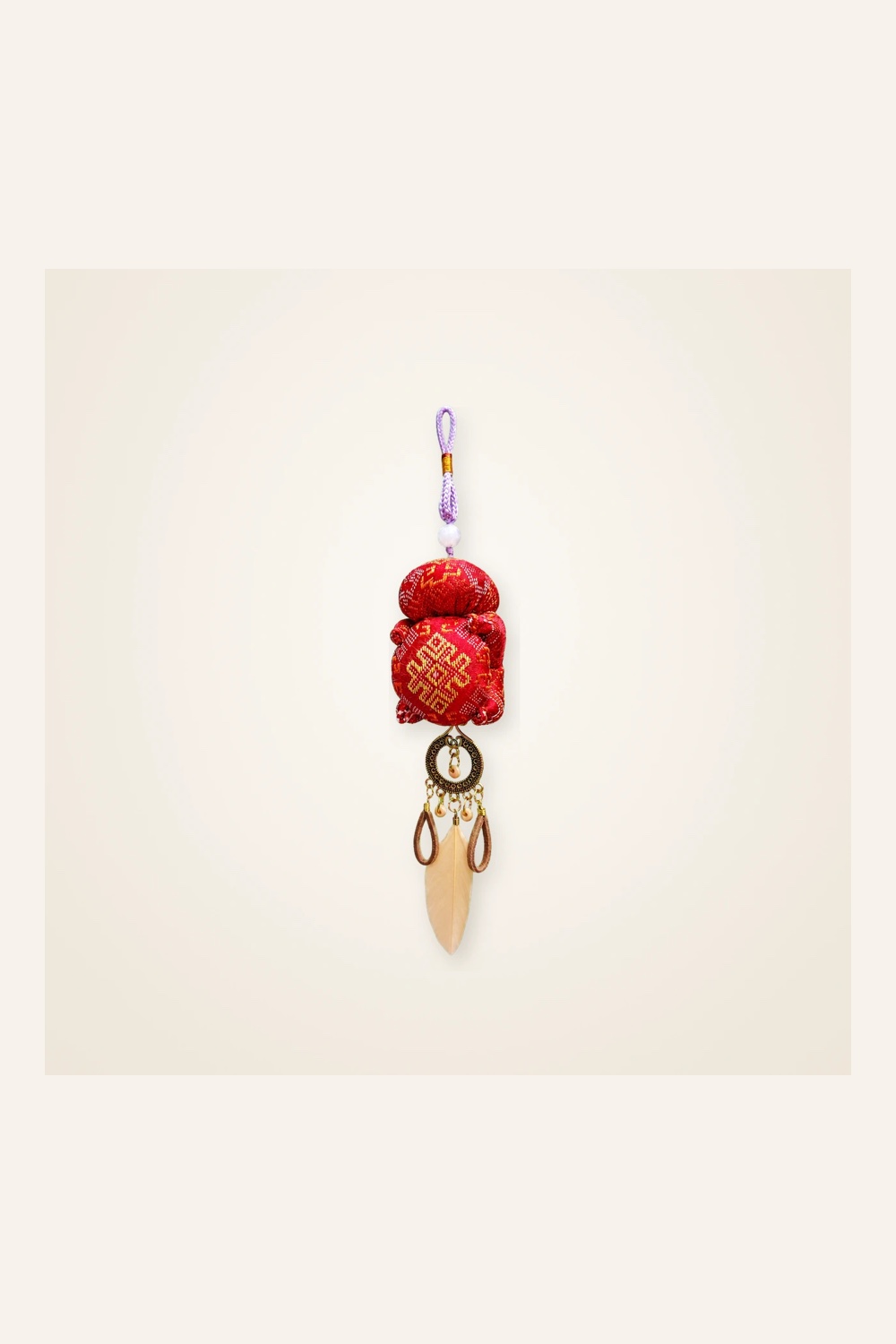
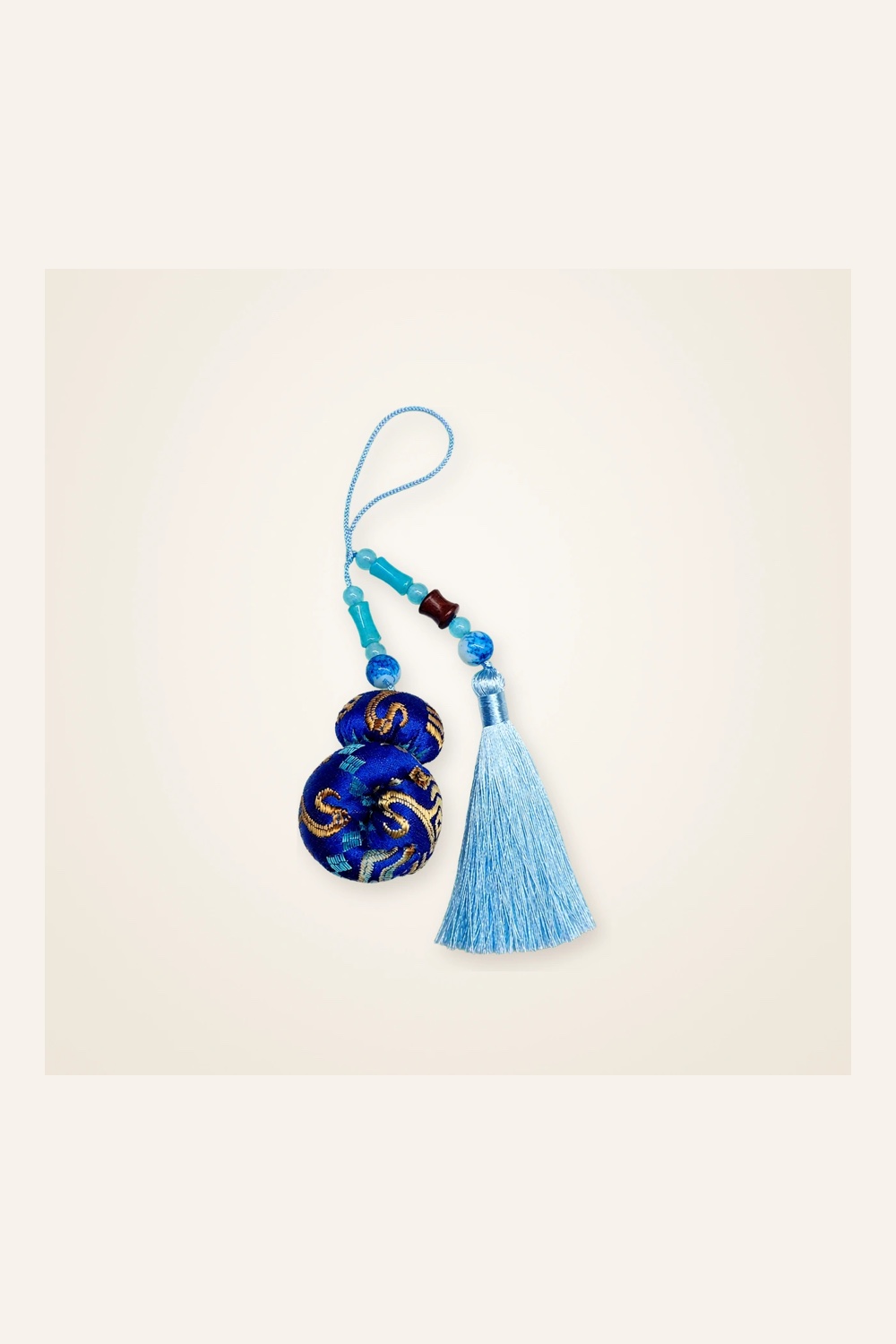
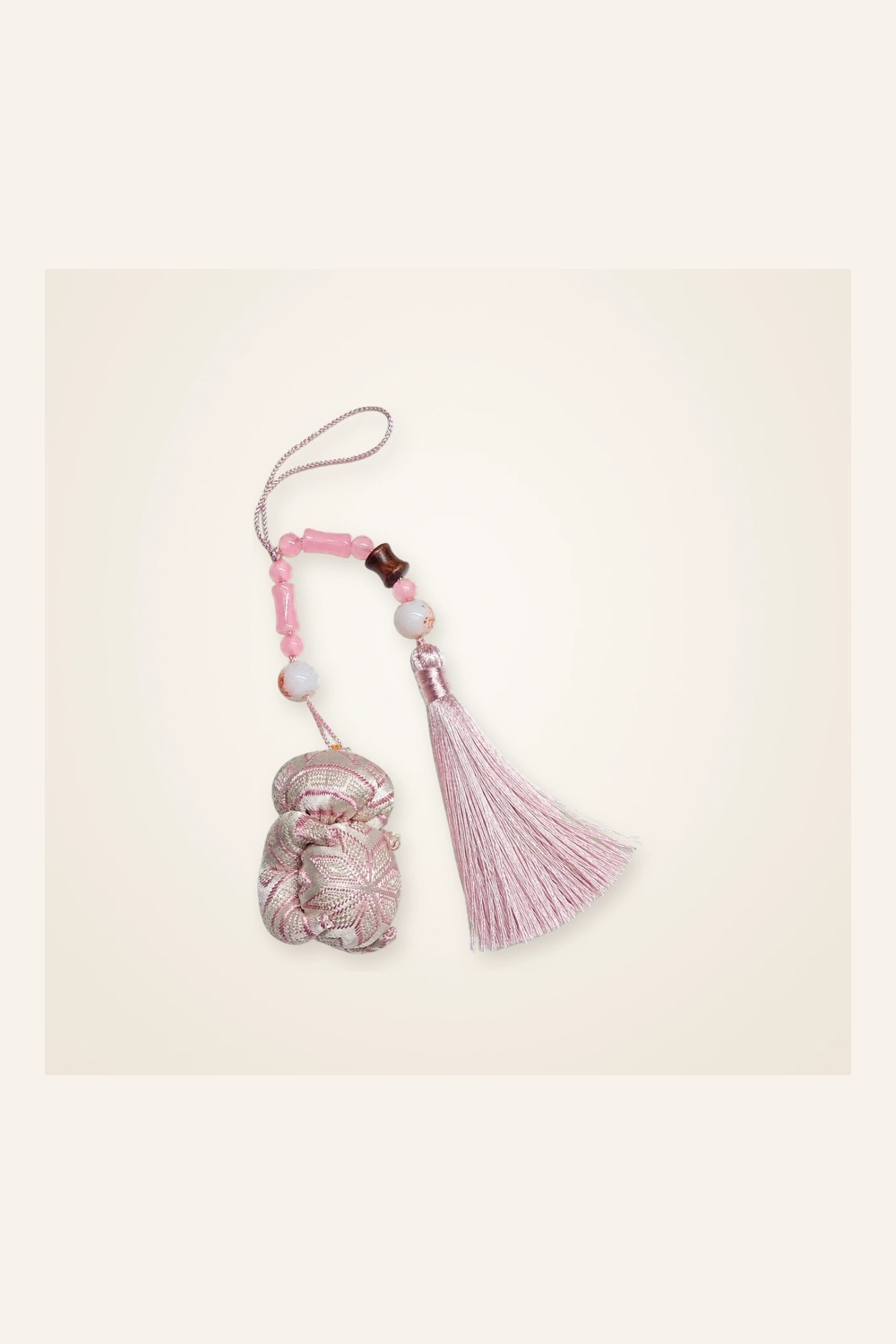
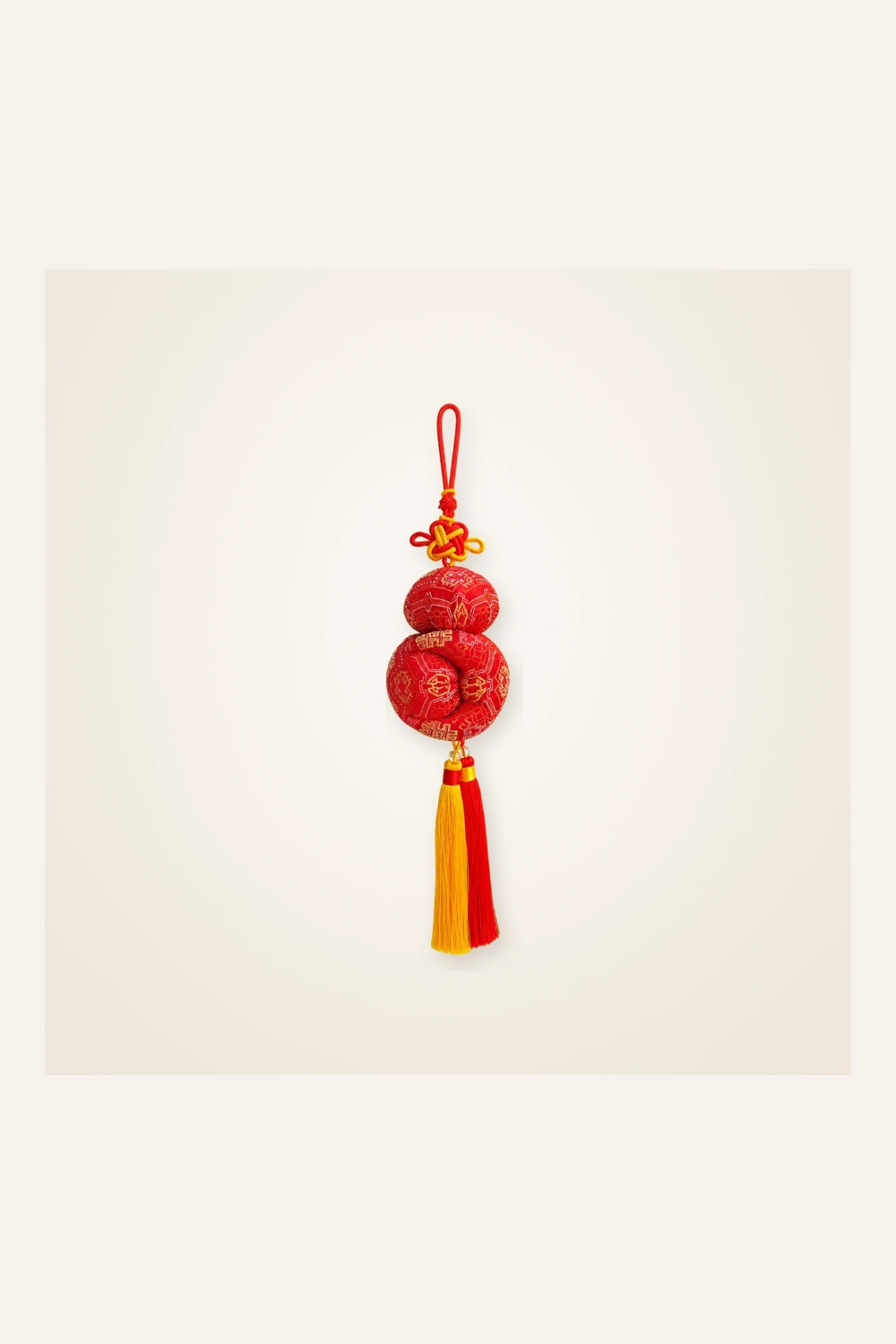
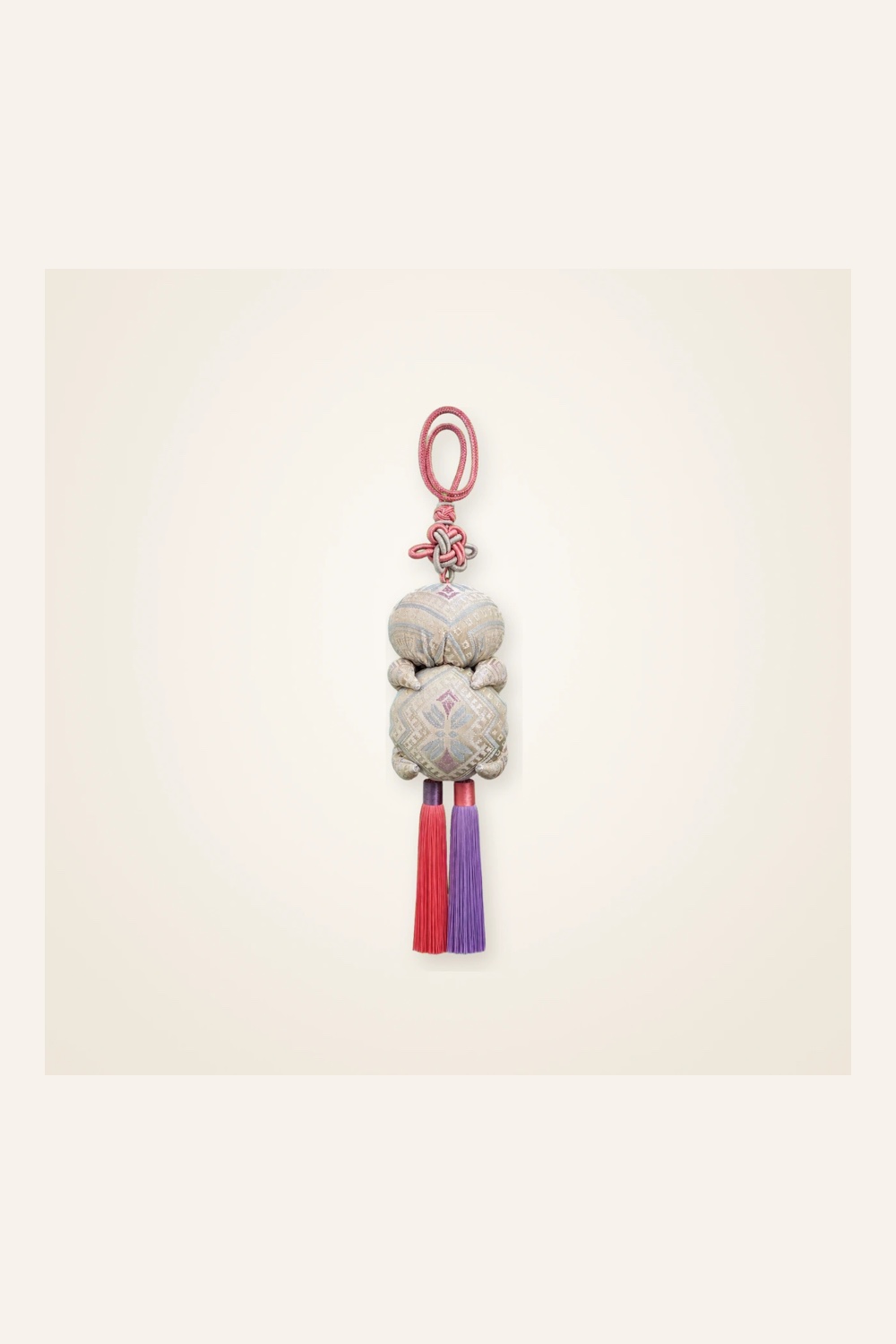
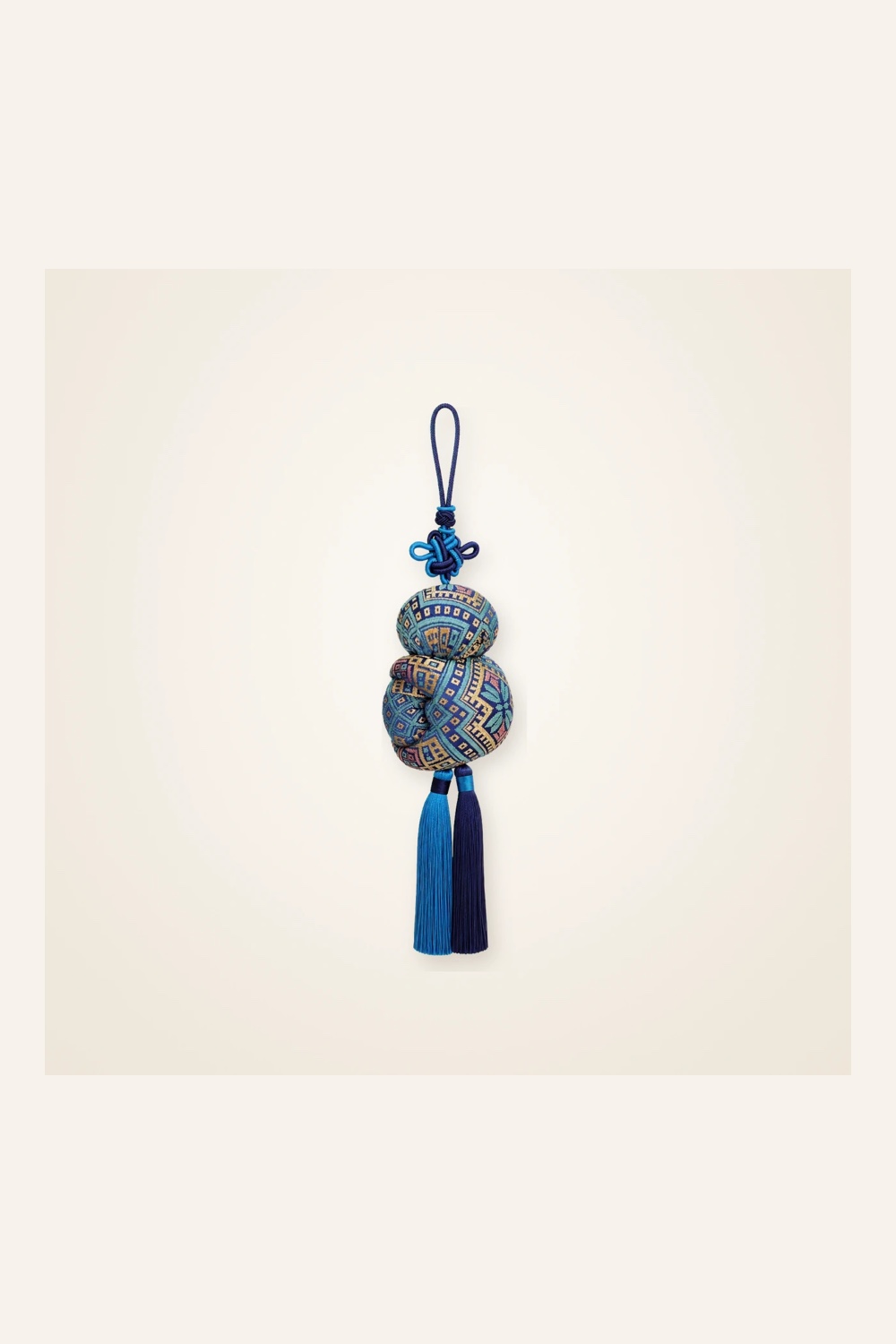
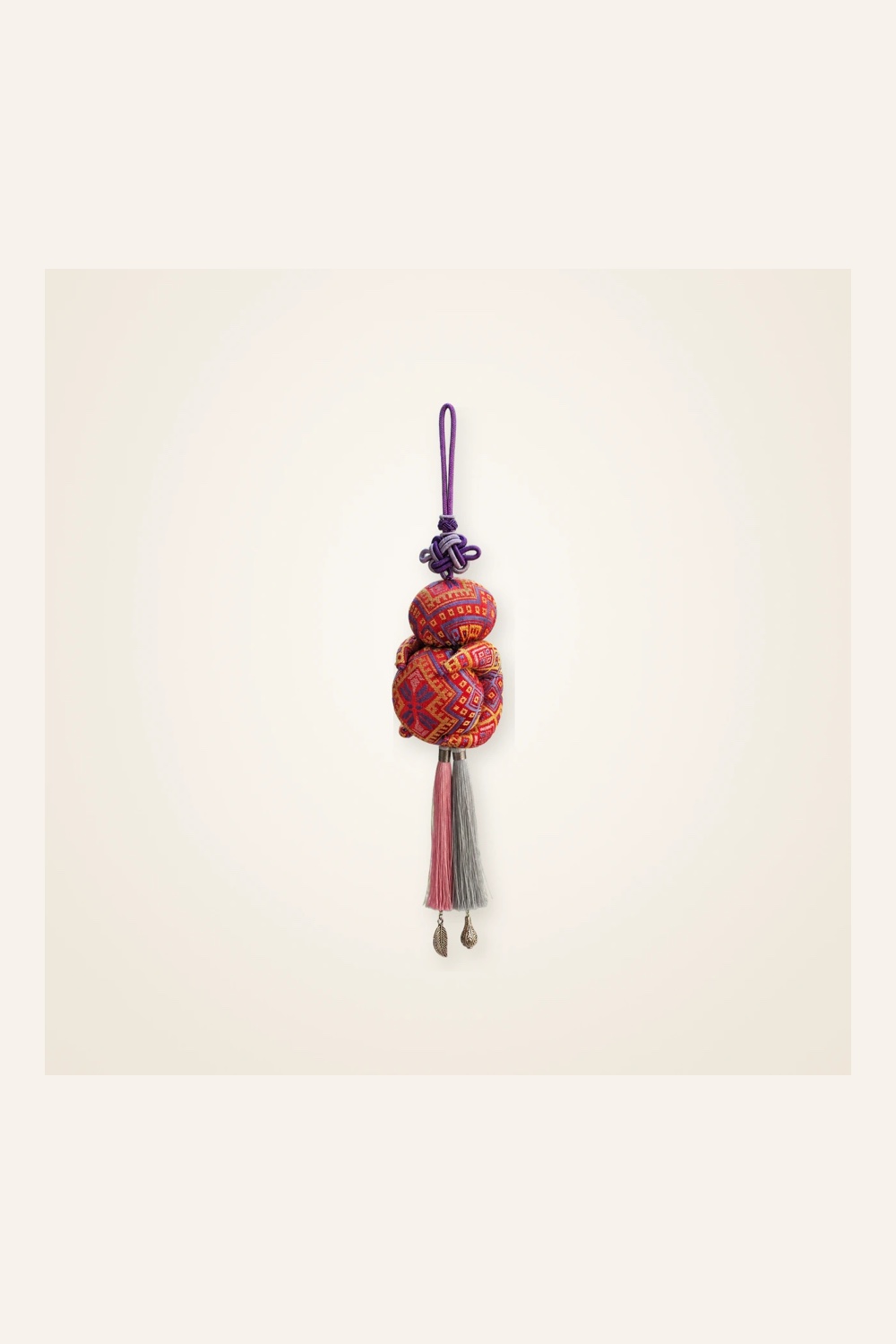
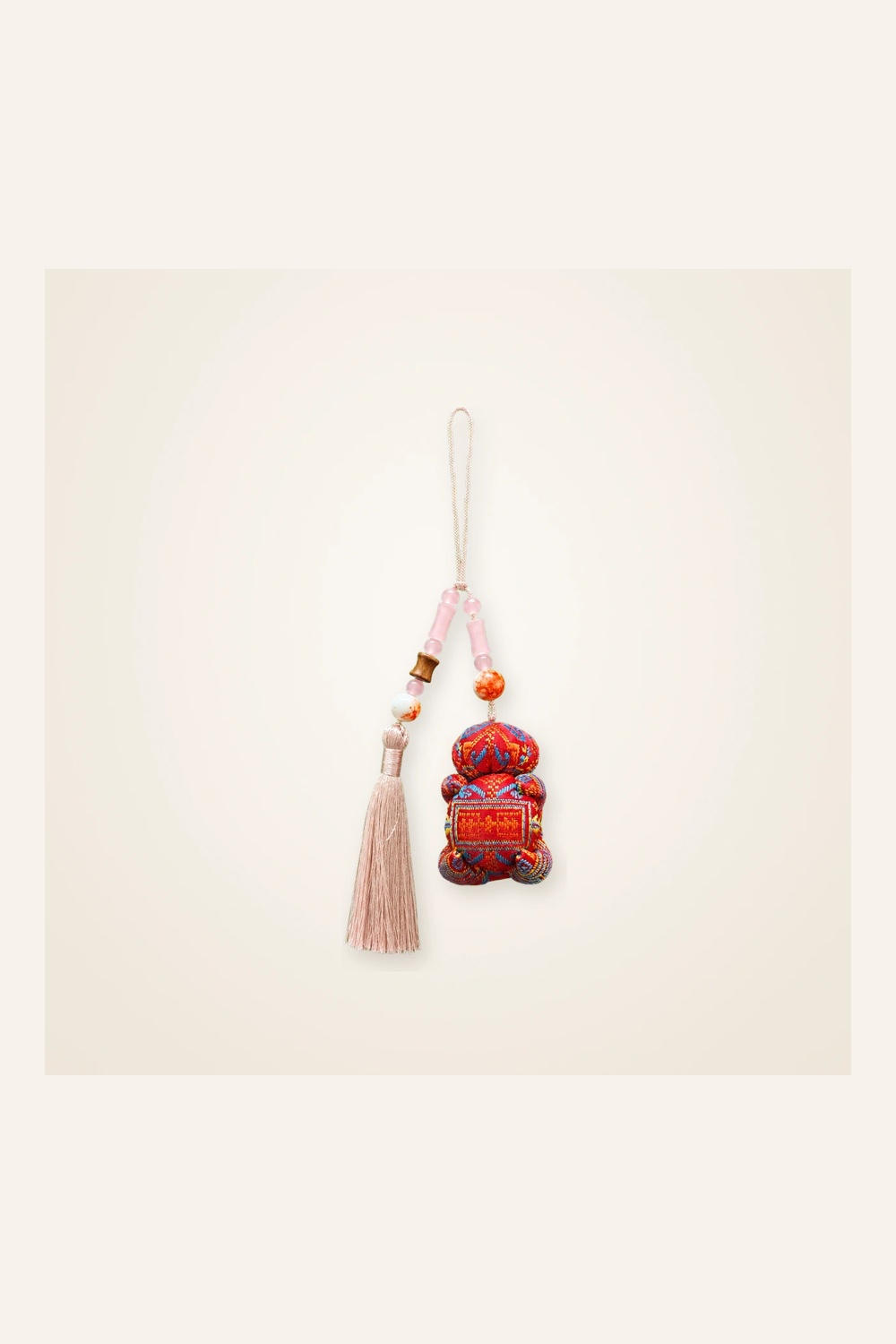
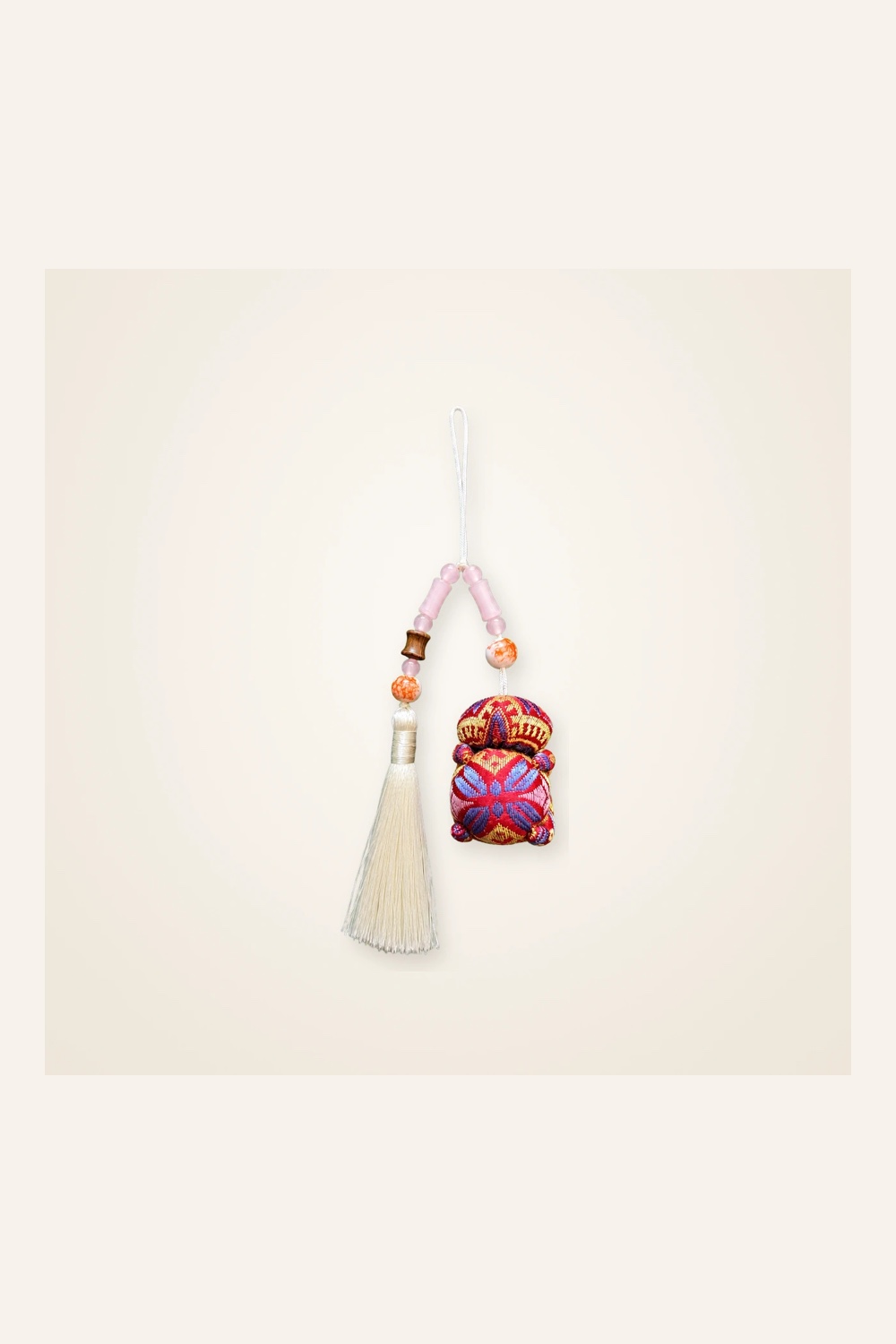
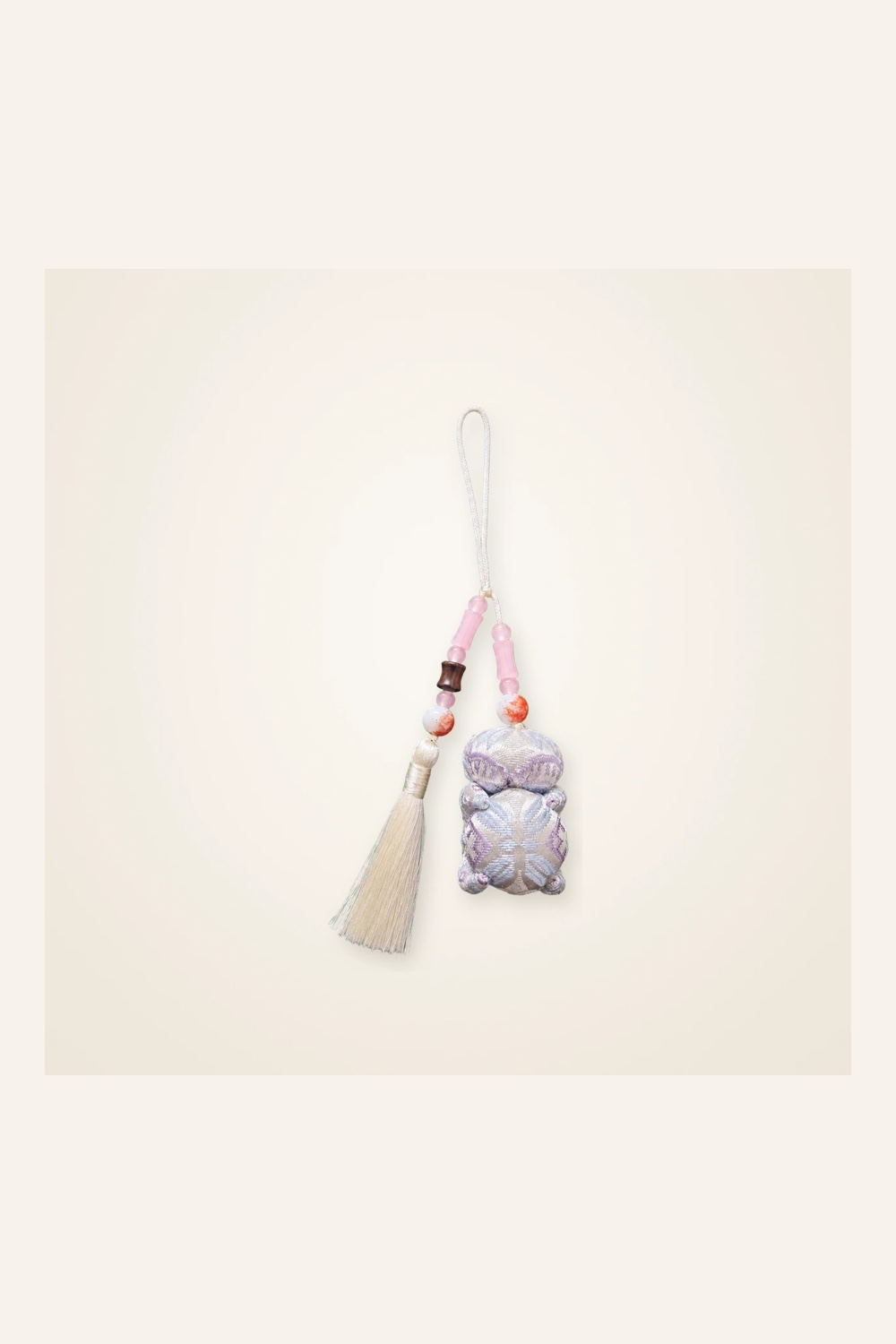
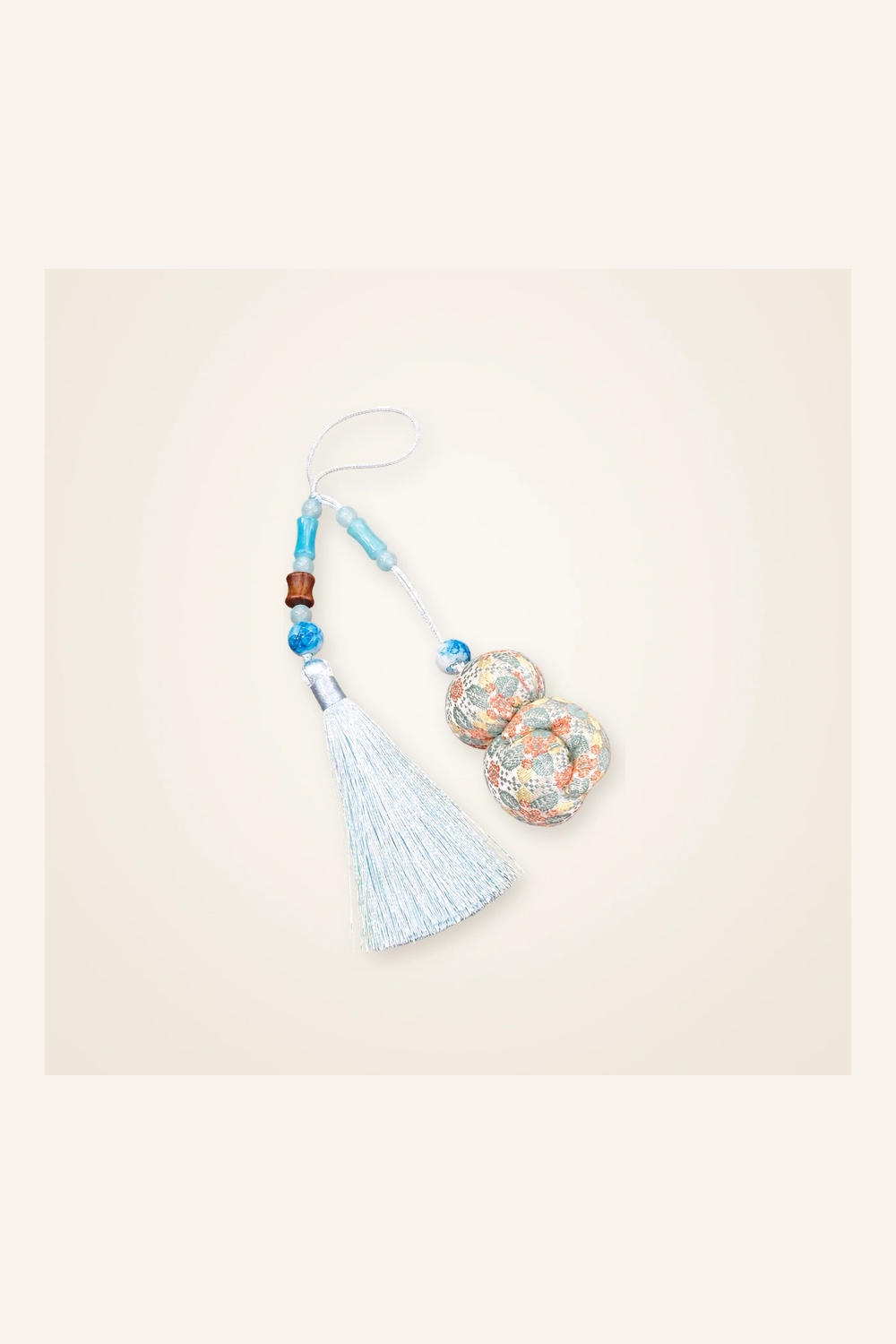
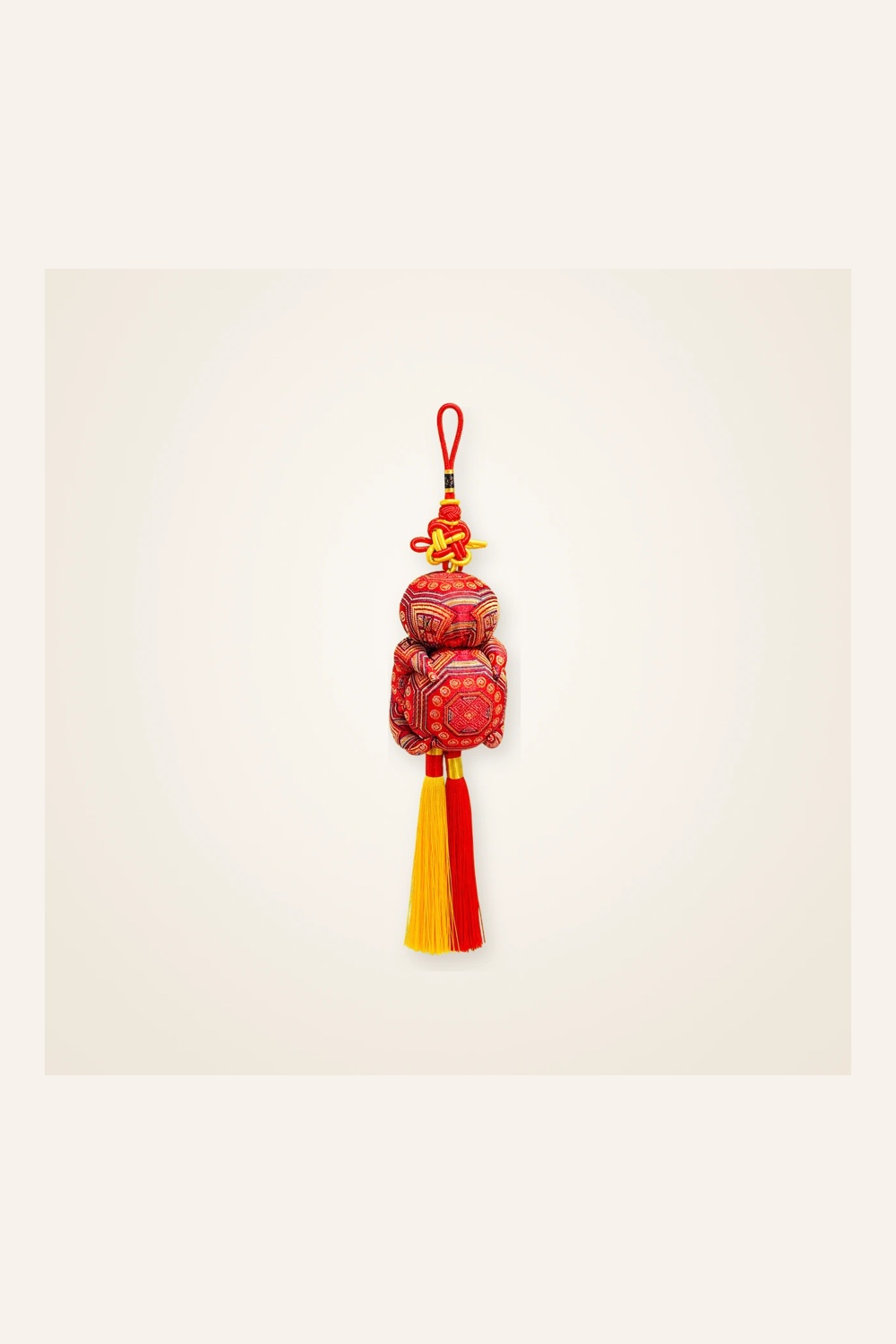
Momie is the guardian figure of the Zhuang creation story. Sewn as a small stuffed sachet, knotted and tasselled entirely by hand, it was given to keep harm away from a child or from someone travelling, and it is traditionally worn at the waist or hung by a door. Making them is itself a listed piece of intangible cultural heritage in Guangxi. The sachets here run from the small AC301 series through the seven-centimetre AC303 pieces to the ten-centimetre festival charm, and the larger the sachet, the more ceremonial the occasion it is meant for.
Tassels, orbs and pendants
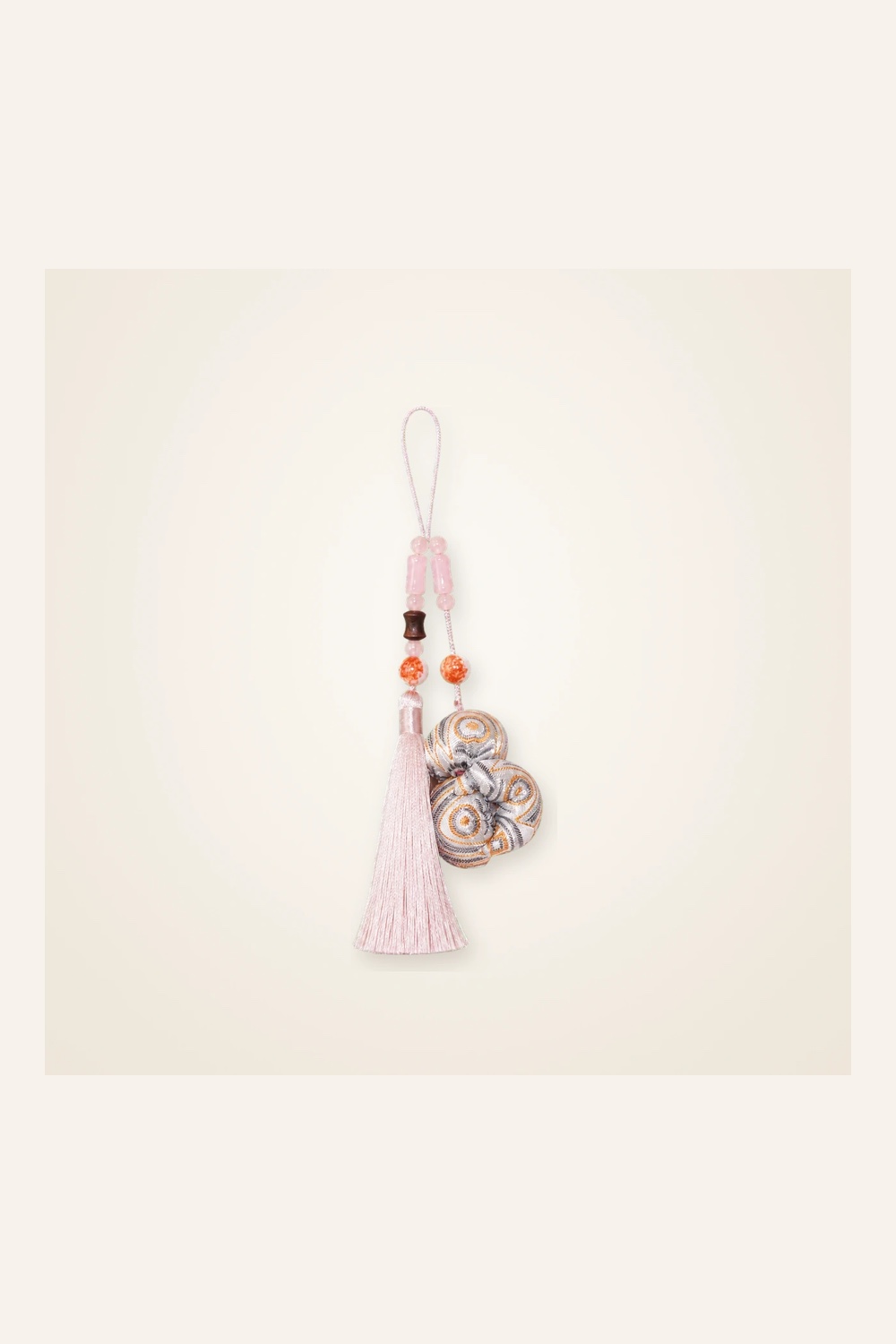
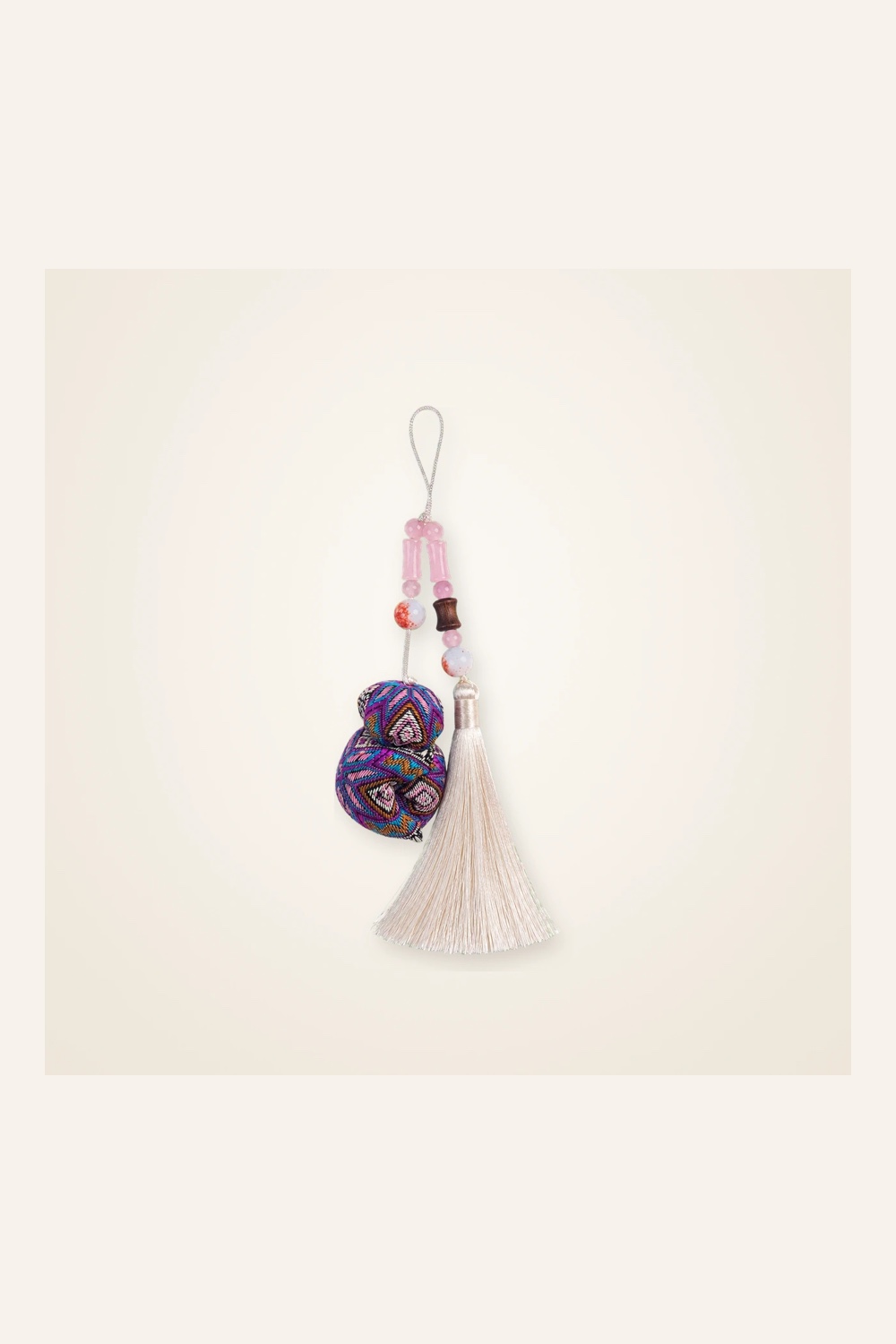
The tassel charms are the everyday register: a woven face, a hand-tied tassel, a cord — small enough to live on a bag handle or a set of keys without weight. The long-tassel series extends the fall for movement. The brocade orb, xiuqiu, is a different object again: a stitched ball whose twelve petals stand for the twelve months, and which sits at the centre of Zhuang courtship, thrown and caught rather than worn. One long-cord necklace turns the same sachet form into jewellery. Cord, tassel and trim are assembled by hand, so the exact combination varies piece to piece.
Choosing a motif to give
Motif matters more here than colour, because a charm is usually chosen for a person. Butterfly and blossom carries a wish for long life and affection. Golden abundance — jin mantang, gold filling the hall — is the New Year charm. Osmanthus, the flower Guangxi is named for, marks a result that arrives in its own time. Highland geometry and the octagonal blossom are the oldest shapes on the loom, read as sun and the eight directions. Prices start at $37, which makes these the natural first purchase from the collection and the piece most often bought several at a time. Spot clean only, and comb a tassel straight with your fingers rather than brushing it.