Choosing a silhouette
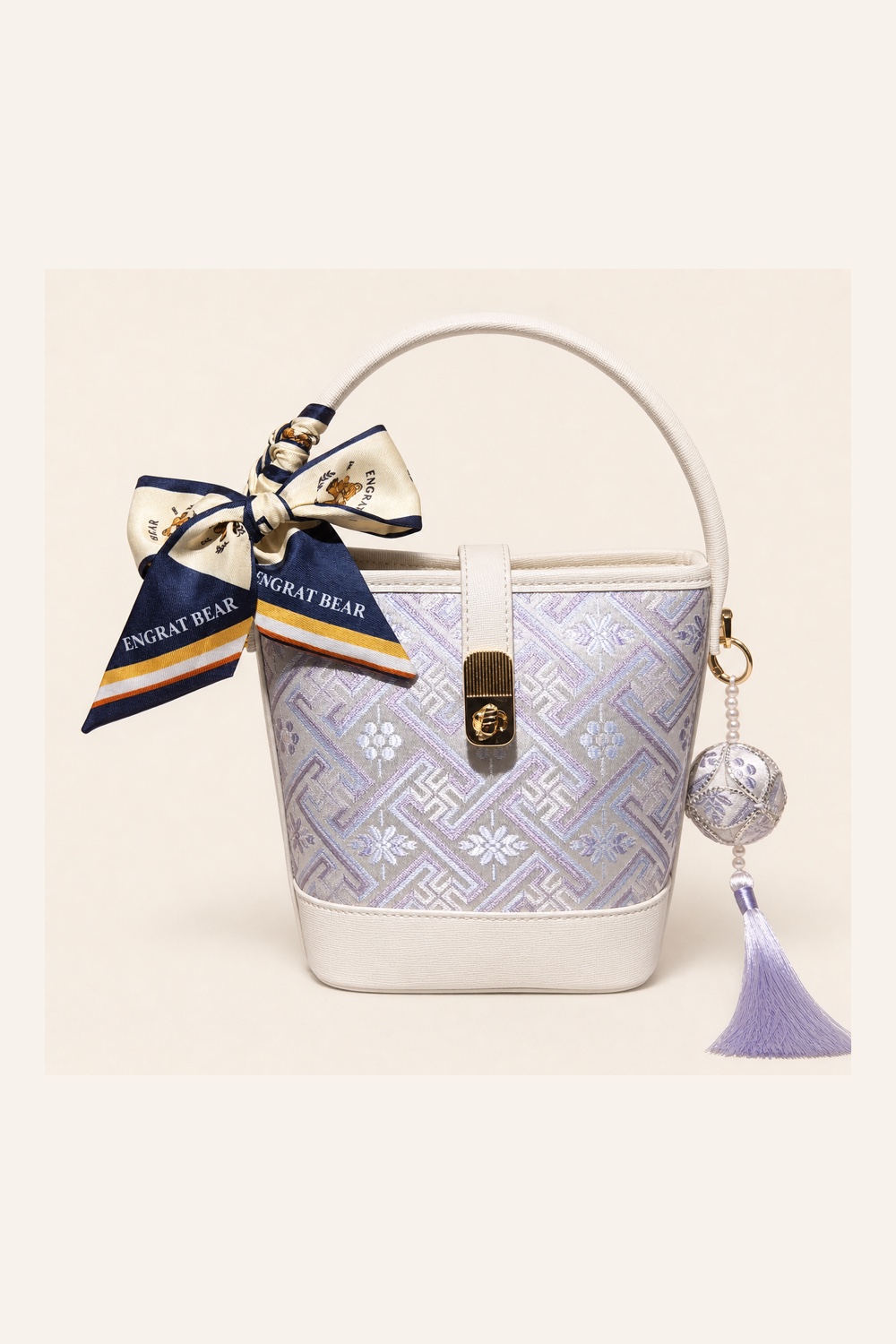
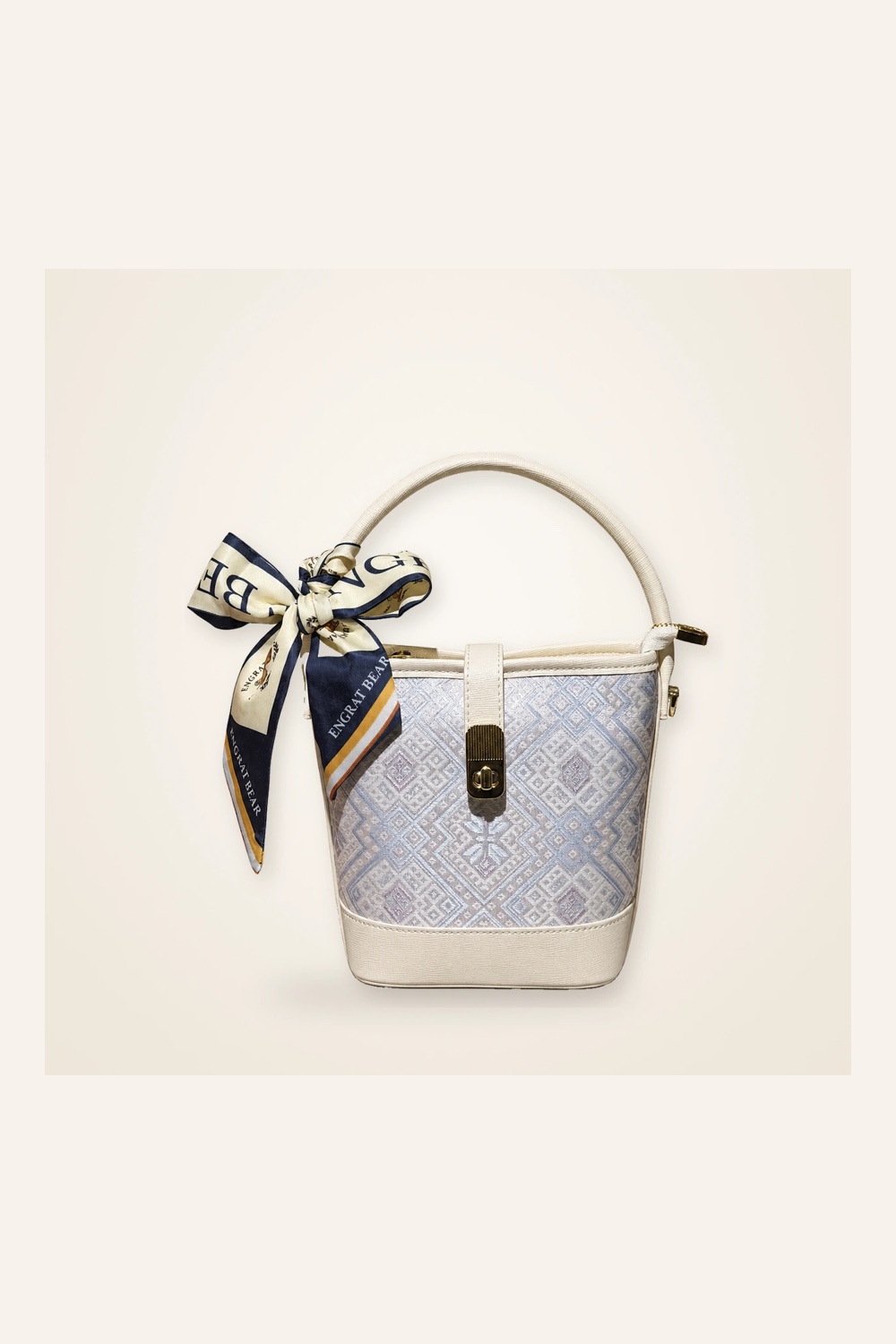
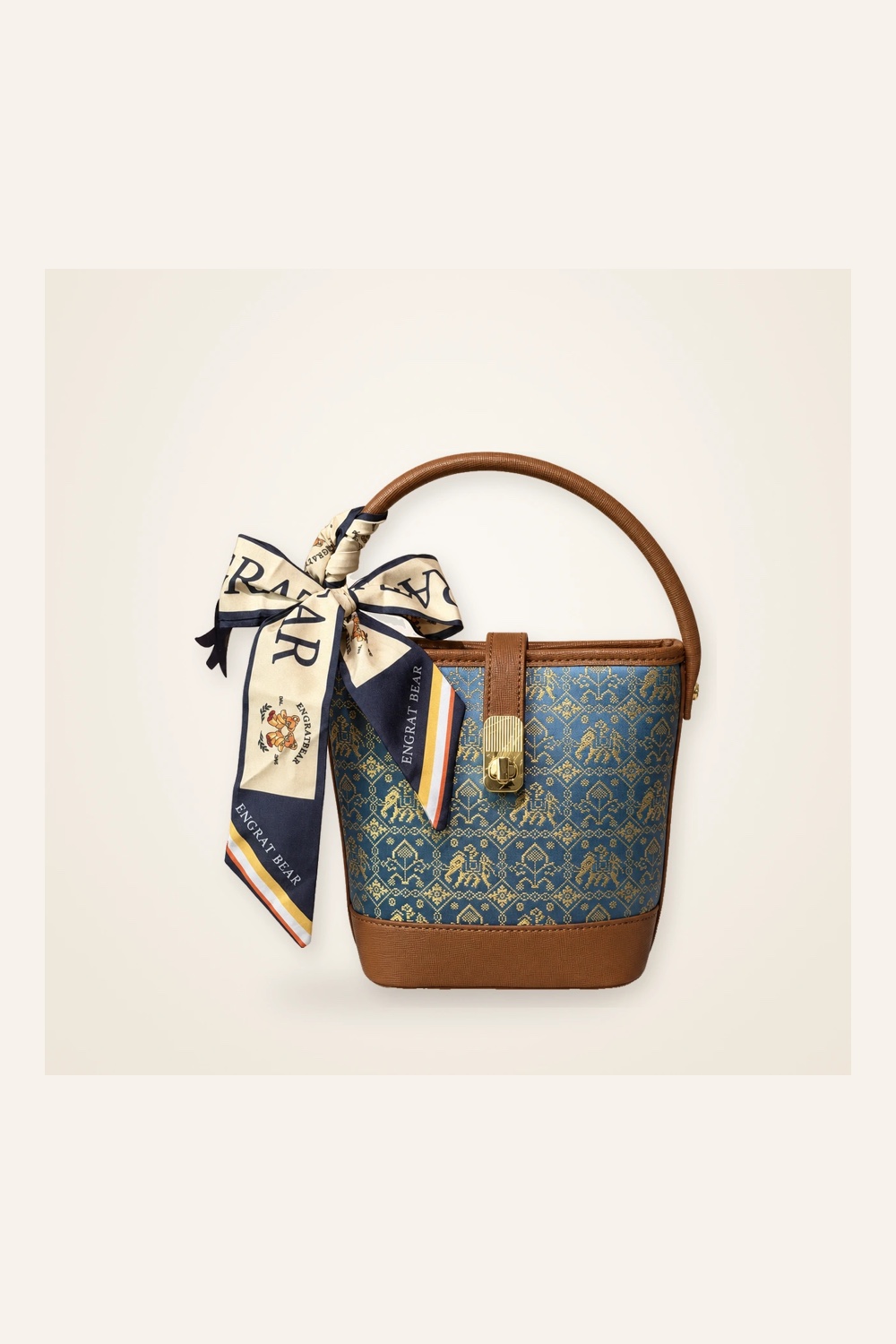
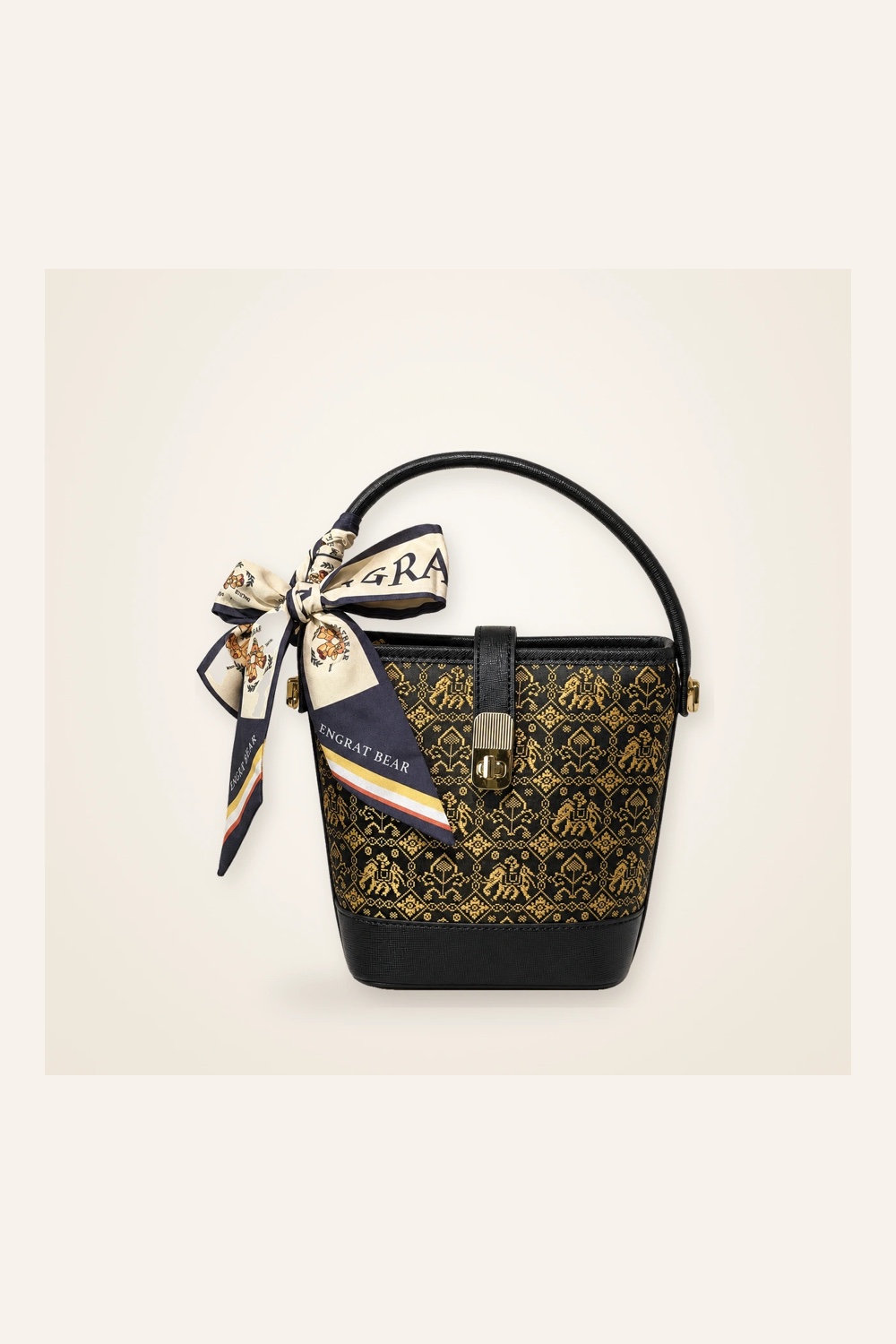
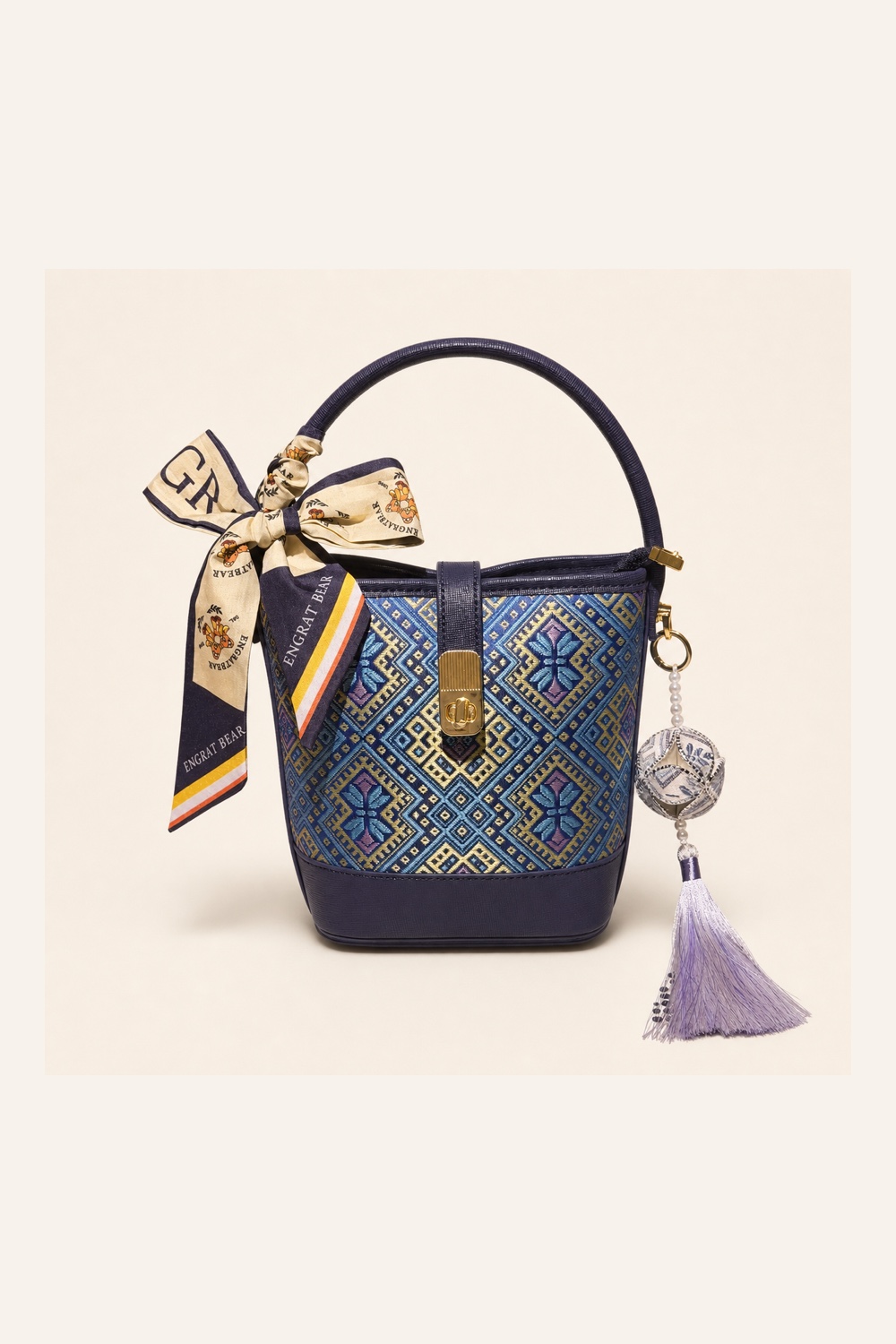
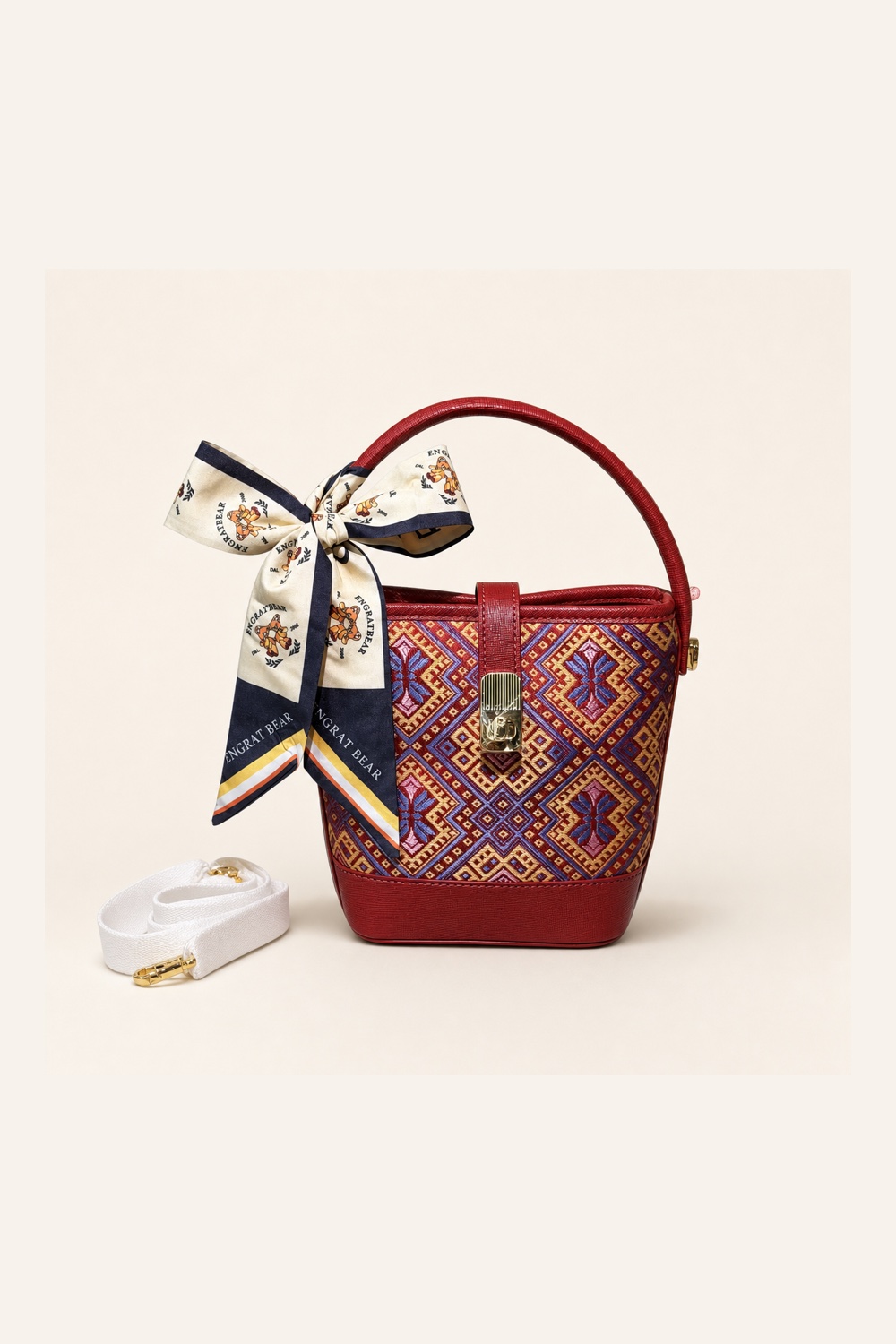
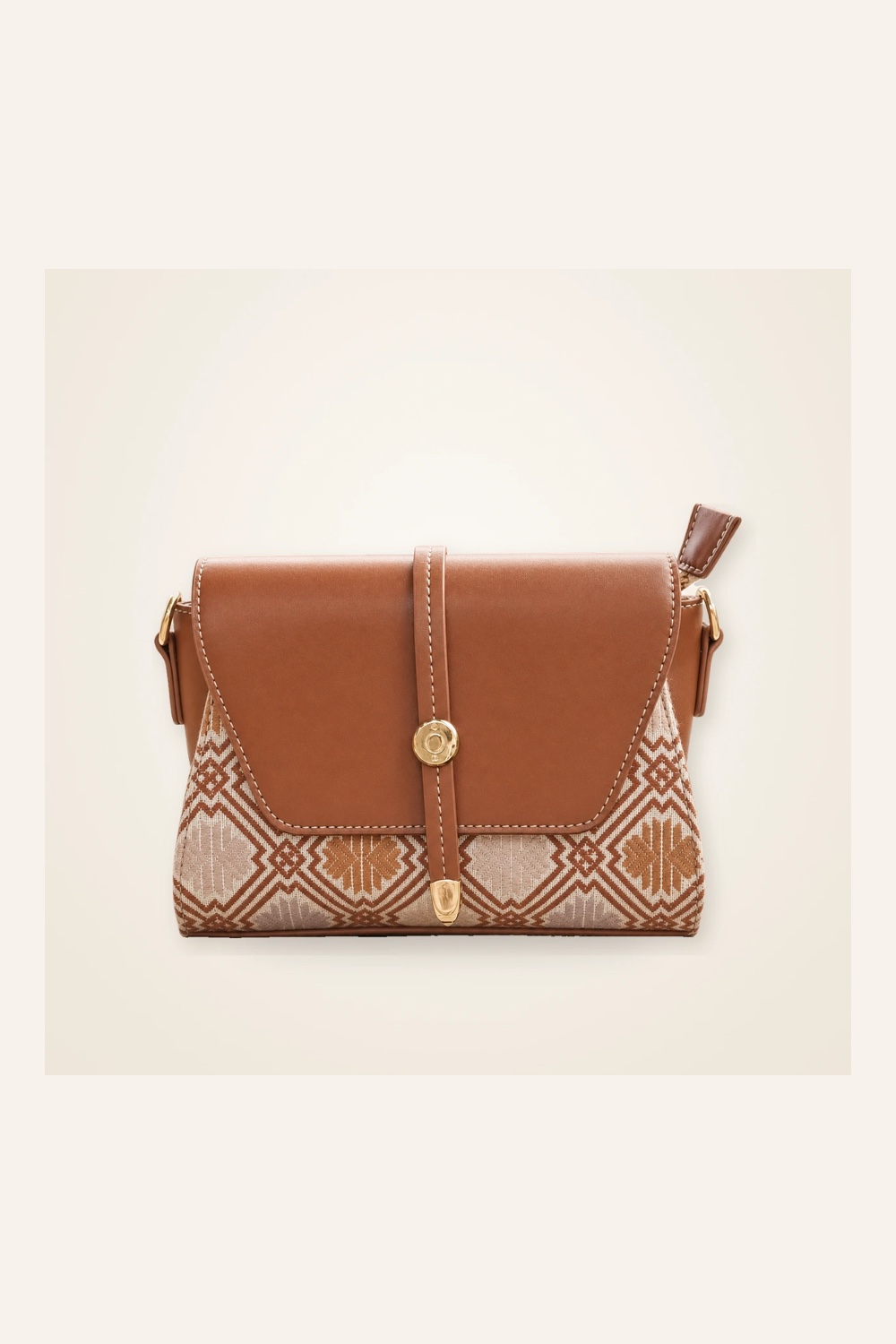
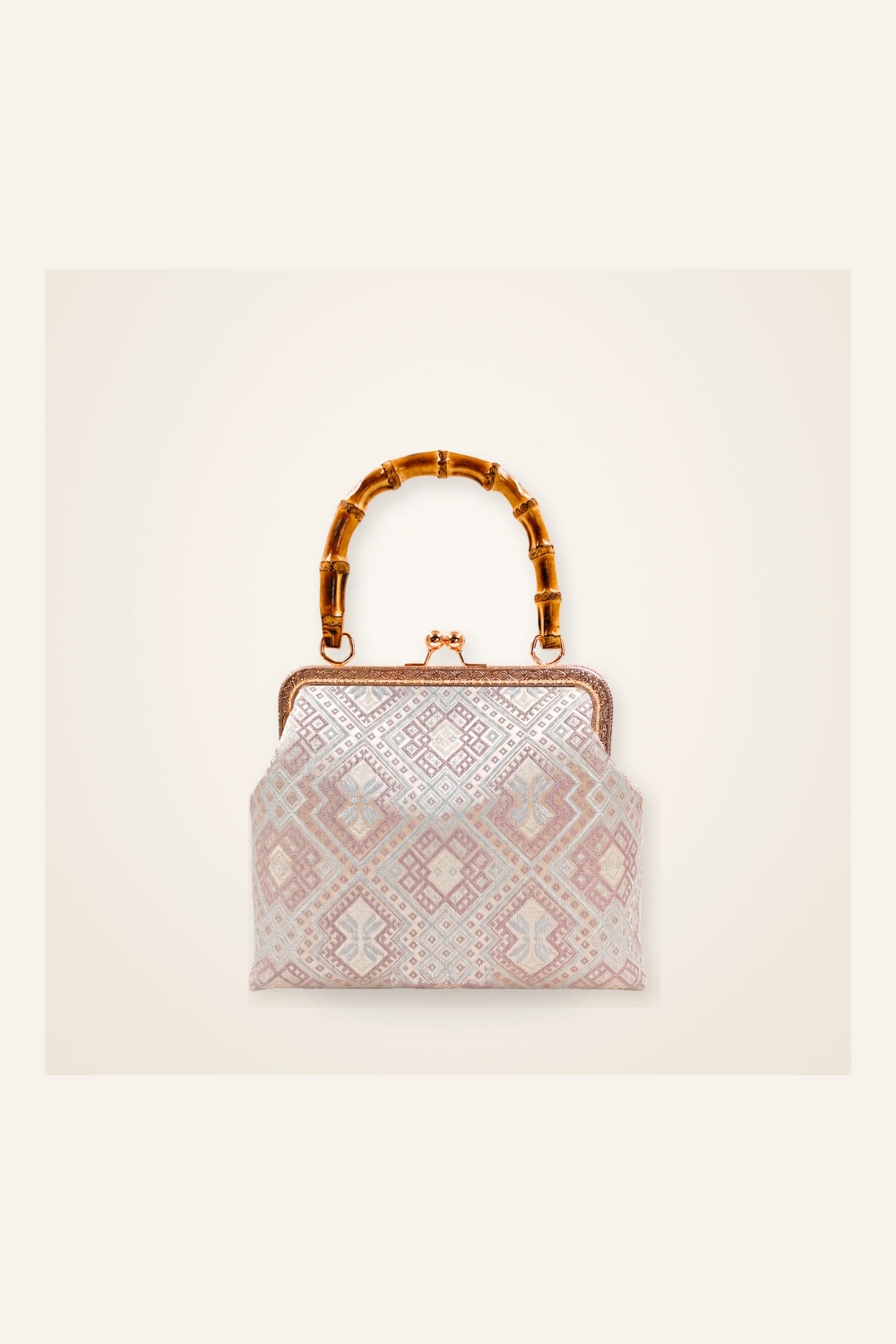
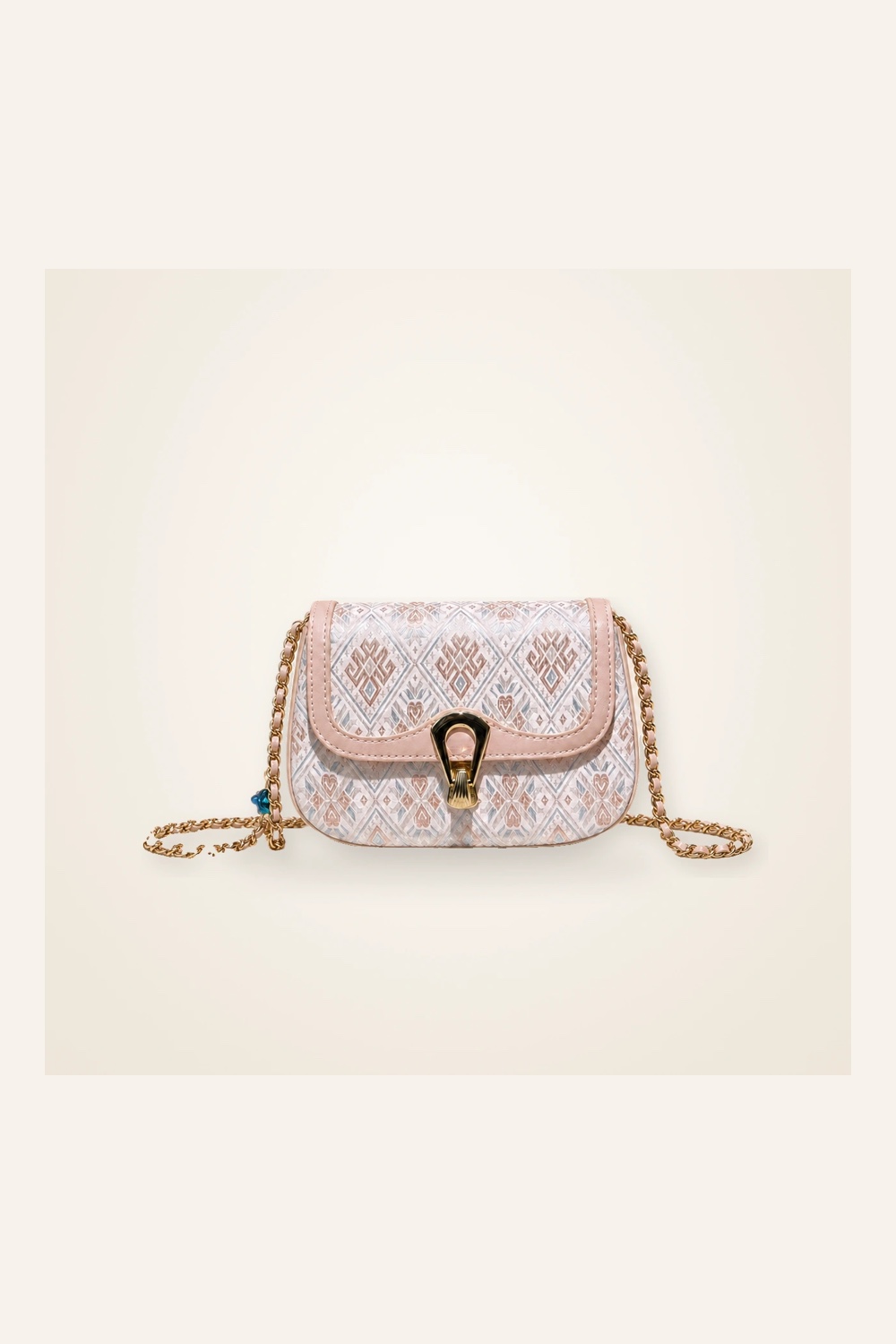
Bucket and cylinder bags carry the largest uninterrupted panel of brocade, so they show a dense motif such as wanxiang or dragon-and-phoenix at full scale; most come with both a short handle and a detachable long strap. Totes are the practical end of the range — twin handles, a flat front face, and enough room for a day out. Crossbody and chain bags put the weight on the shoulder and keep the woven face small and flat, which suits fine motifs like butterfly shadow. Mini bags, including the bamboo-handle frame styles, are evening and occasion pieces: the clasp frame keeps the mouth square and the whole object reads as jewellery more than luggage.
Brocade with leather, bamboo and metal
The woven panel is the slow part. A weaver produces a limited length per day, and the panel is cut only once the motif is centred where it needs to sit on the finished bag, which is why the pattern rarely lands identically on two bags of the same model. Leather bodies are full-grain or vegetable-tanned cowhide, chosen so the bag ages rather than wears out. Hardware is gold-tone or rose-gold; bamboo handles are turned from natural cane, so grain and tone vary. Several models ship with a printed silk scarf that can be tied to the handle or worn separately.
Wearing and caring for a woven bag
Treat the brocade like fine cloth rather than like leather: dust it with a dry, soft cloth, keep it out of long direct sun, and let it dry naturally if it gets caught in rain. Leather parts take a neutral cream twice a year. Stored upright and loosely filled, a woven panel keeps its shape for years. Small irregularities in the weave — a motif that sits a millimetre off centre, a thread with a slightly different sheen — are the signature of hand production and are not treated as faults.