Why a woven scrunchie behaves differently
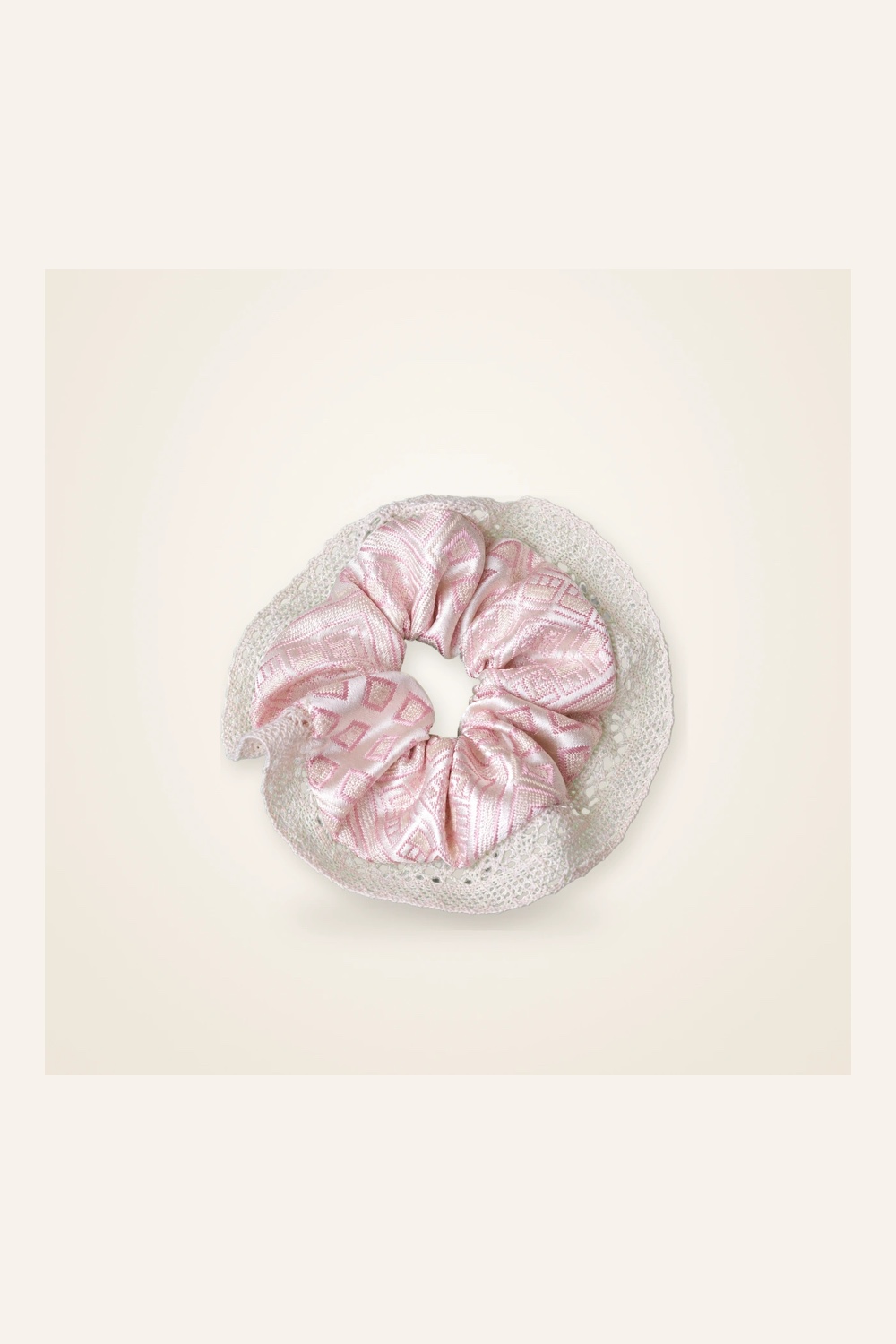
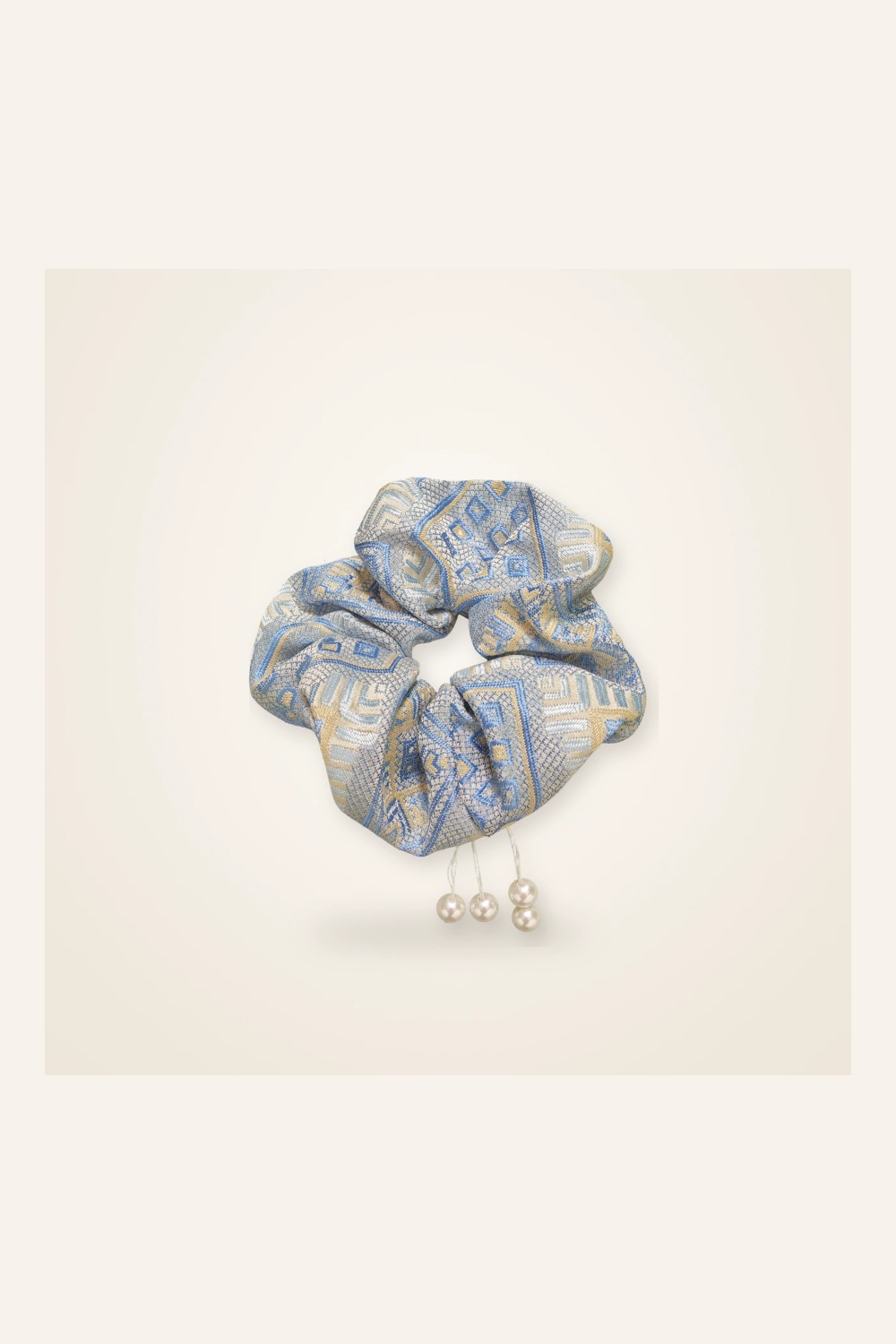
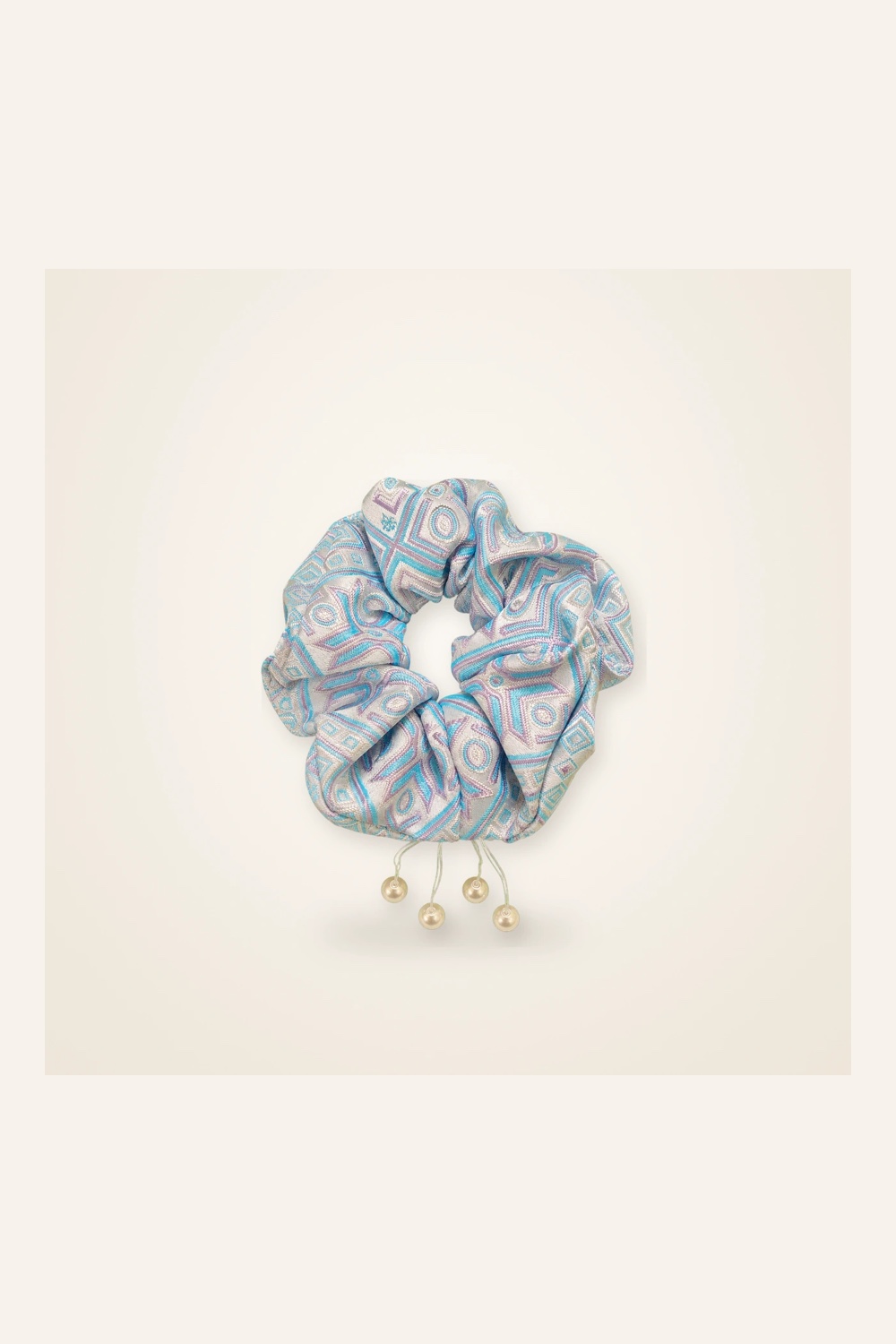
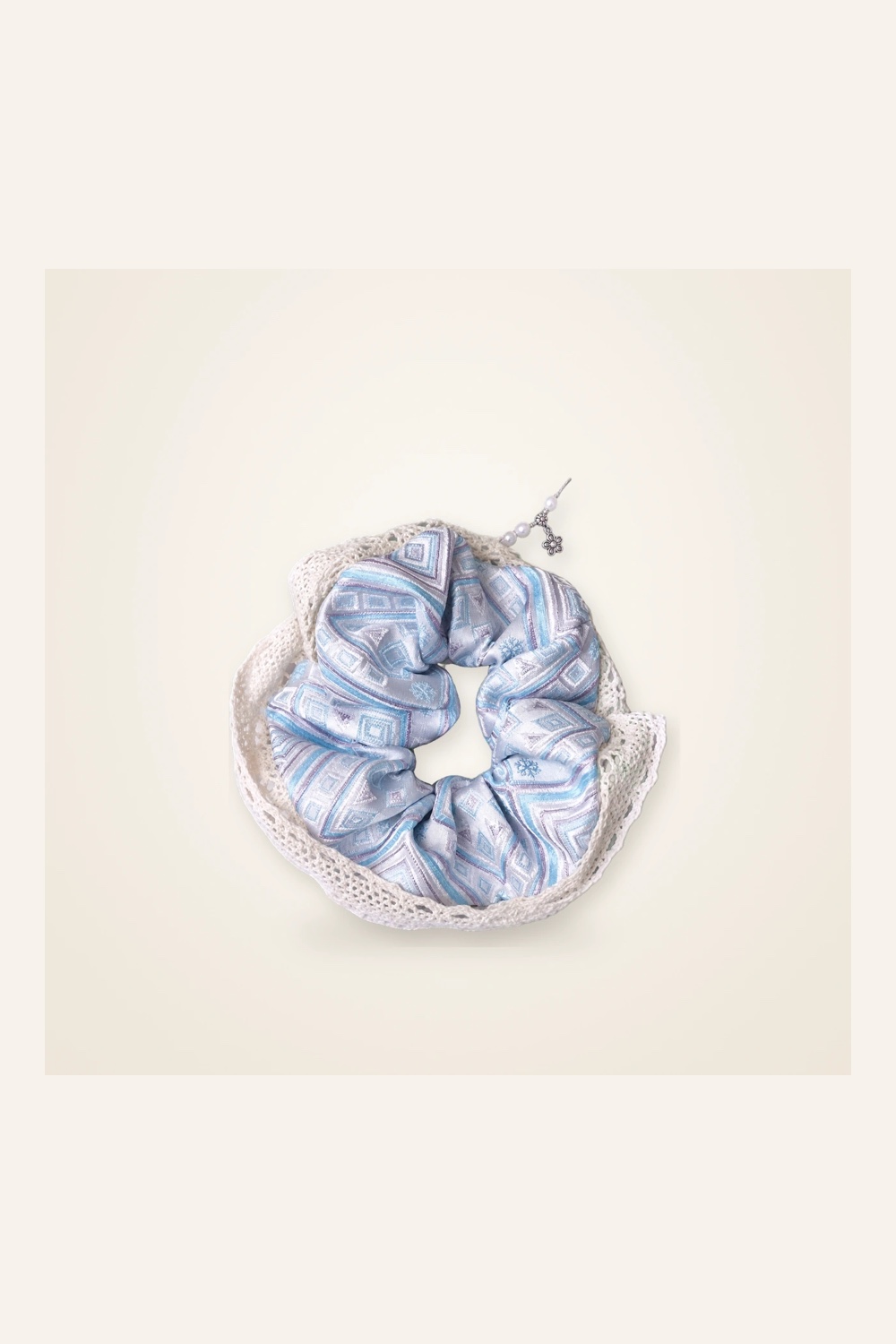
Most scrunchies are cut from printed fabric, so the pattern is flat and the band is uniform. These are cut from cloth woven on a treadle loom with a supplementary weft, which means the motif is raised and the band has body. Gathering it by hand rather than machine-ruching it leaves the pleats deliberately uneven, so the piece sits with a fuller, less mechanical shape and holds thick hair without the flattened look a printed band gets after a few wears.
Fourteen motifs, one object
Butterfly and blossom appears in blush, lilac and a lace-trimmed version; the lone phoenix in amethyst and in gold-and-azure; phoenix blossom on its own. The pastoral and field-of-blessings weaves — a cultivated field seen from above, divided into plots and planted with small flowers — read as soft all-over prints at arm's length and are the easiest to wear to work. Pale blue geometry is the graphic option. Lilac wanji carries the everlasting-fortune interlock, the hardest of these motifs to weave evenly by hand. Violet swallow marks the return of spring.
Wearing, gifting and washing
At $29 these are the entry point to the collection and the piece most often bought in threes — one to wear, two to give. They suit thick and fine hair equally because the gather, not the elastic, does most of the work: the band grips through friction and volume rather than through tension, which is why it leaves less of a crease than a thin elastic tie. They also travel well as a gift, since a scrunchie needs no sizing and no explanation. Hand wash cool with a mild detergent, reshape while damp and dry flat away from heat; do not wring the band, because the elastic core is sewn in rather than threaded and twisting it hard can break the stitching that holds the gather. Keep them out of long direct sun like any plant-dyed thread, and the colour holds for years.